







What Does NAD+ Do in the Body?
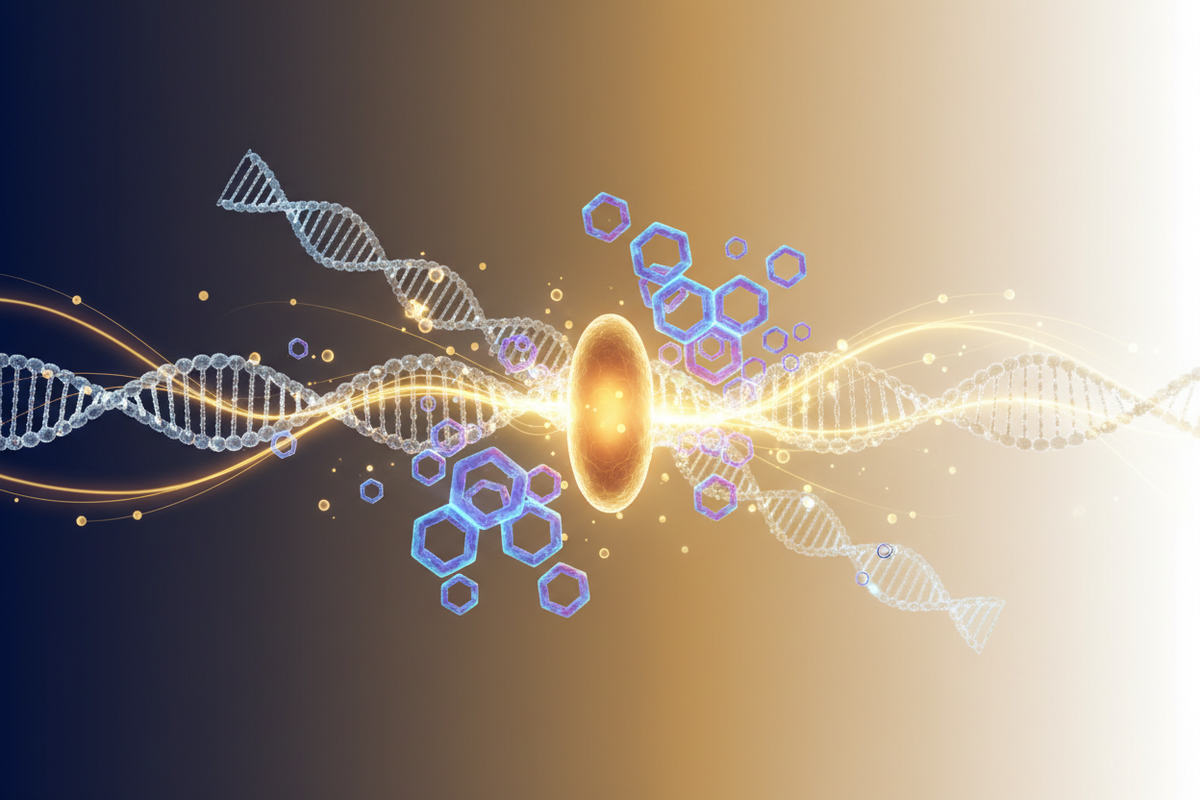
A science-backed look at the coenzyme powering your cells — from energy to DNA repair.
First, What Is NAD+?
NAD+ stands for nicotinamide adenine dinucleotide. It’s a coenzyme — a small molecule that works alongside enzymes to drive biochemical reactions — and it’s present in every single cell of your body.
Here’s the scale of it: NAD+ participates in over 500 enzymatic reactions and is involved in more metabolic pathways than almost any other molecule in human biology. It’s not a nutrient in the traditional sense. It’s more like the operating system your cells run on.
And like any operating system, it needs to be maintained. The problem? NAD+ levels decline by roughly 50% between the ages of 40 and 60, and continue falling from there.
What Does NAD+ Actually Do?
1. Cellular Energy Production
The most fundamental role of NAD+ is in energy metabolism. Inside your mitochondria — the power plants of your cells — NAD+ acts as an electron carrier in a process called the electron transport chain (ETC).
Here’s how it works in plain terms:
- You eat food → nutrients are broken down into electrons
- NAD+ picks up those electrons (becoming NADH)
- NADH delivers them to the mitochondria to generate ATP — the energy currency your cells spend on everything from muscle contraction to brain function
Without adequate NAD+, this process slows down. Less ATP means less available energy at the cellular level — which can manifest as fatigue, brain fog, and reduced physical performance.
By the numbers: The average human body turns over its entire ATP supply roughly 40 times per day. NAD+ is central to that cycle running efficiently.
2. Metabolism
NAD+ plays a direct role in three of the most critical metabolic pathways in the body:
- Glycolysis — Breaking down glucose into pyruvate (the first step in energy production)
- The citric acid cycle (Krebs cycle) — Extracting energy from carbohydrates, fats, and proteins
- Oxidative phosphorylation — The final, highest-yield stage of ATP production
Beyond energy, NAD+ also regulates sirtuins — a family of seven proteins (SIRT1–SIRT7) that influence fat metabolism, insulin sensitivity, and mitochondrial biogenesis (the creation of new mitochondria). SIRT1 is strongly associated with improved insulin signaling and reduced fat accumulation. SIRT3 is linked to mitochondrial efficiency. Both require NAD+ to function.
Research note: A 2013 study published in Cell found that restoring NAD+ levels in aged mice significantly improved mitochondrial function and muscle metabolism — results that fueled significant interest in NAD+ precursor research in humans.
3. DNA Repair
Every day, your DNA sustains thousands of small breaks and lesions — from UV radiation, oxidative stress, toxins, and normal cellular activity. NAD+ is essential to fixing that damage.
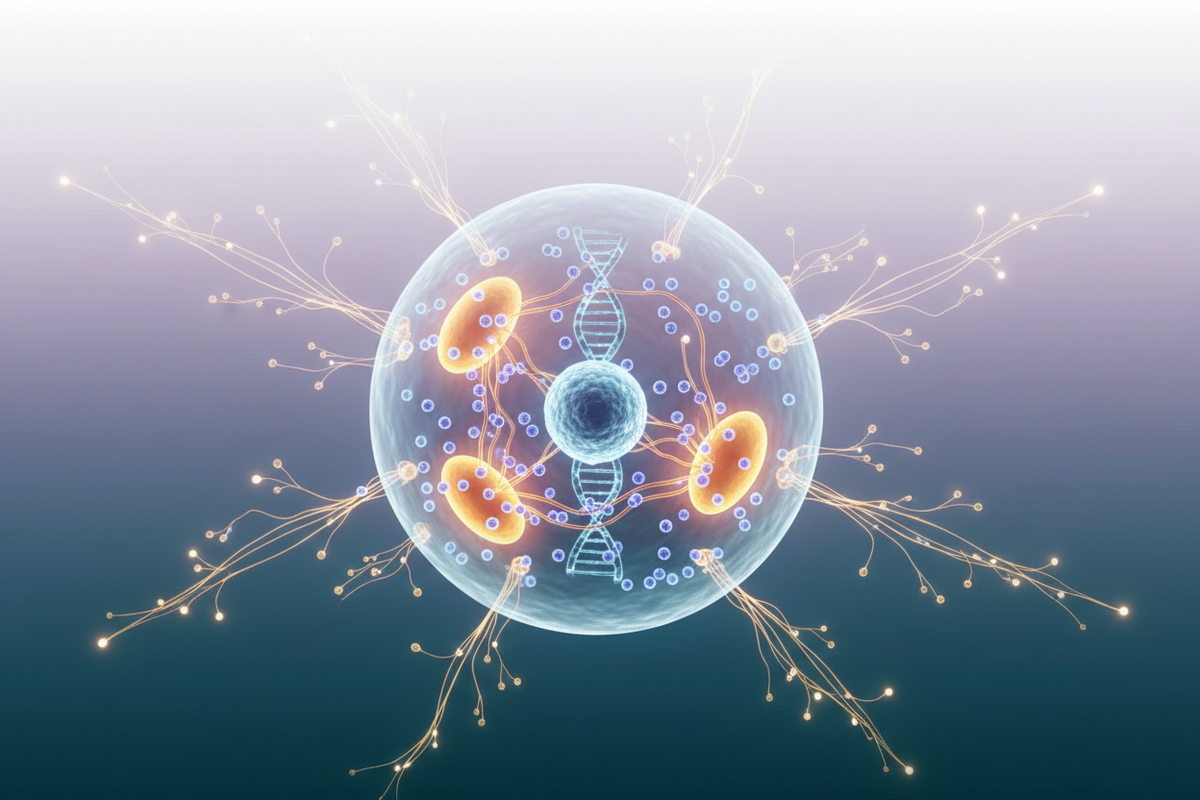
It does this by fueling PARP enzymes (Poly ADP-Ribose Polymerases), which are the primary responders to DNA strand breaks. When PARPs detect damage, they consume NAD+ to build repair scaffolding around the break.
The challenge: PARP activation is one of the largest consumers of NAD+ in the body. High levels of DNA damage — common as we age — can rapidly deplete NAD+ reserves, creating a feedback loop where low NAD+ leads to slower repair, which leads to further cellular dysfunction.
By the numbers: PARPs can consume up to 80% of a cell’s NAD+ supply during periods of high DNA damage. This is one reason NAD+ depletion accelerates with age.
4. Cellular Signaling
NAD+ isn’t just a fuel — it’s a signaling molecule. It regulates how cells communicate and respond to stress through several mechanisms:
- Sirtuins (SIRT1–SIRT7) — NAD+-dependent deacetylases that regulate gene expression, stress response, and inflammation
- CD38 — An enzyme that degrades NAD+ and is upregulated during inflammation; CD38 activity increases significantly with age, contributing to NAD+ decline
- cADPR signaling — A NAD+-derived messenger involved in calcium signaling, which affects muscle contraction, immune response, and neurotransmitter release
Why NAD+ Declines With Age
NAD+ levels aren’t static. They fall due to:
- Increased PARP activity as DNA damage accumulates
- Rising CD38 expression during chronic low-grade inflammation (“inflammaging”)
- Reduced biosynthesis as the salvage pathway becomes less efficient
- Dietary changes and reduced precursor availability
| Age Range | Estimated NAD+ Level (relative) |
|---|---|
| 20s | ~100% (baseline) |
| 40s | ~60–70% |
| 60s | ~40–50% |
| 80s | ~25–35% |
Estimates based on tissue studies; individual variation applies.
Can You Support NAD+ Levels?
You can’t supplement NAD+ directly — oral NAD+ has poor bioavailability and is largely broken down before reaching cells. Instead, the research has focused on precursors that your body converts into NAD+:
- NMN (Nicotinamide Mononucleotide) — Converts to NAD+ in one enzymatic step; multiple human trials show significant increases in blood NAD+ levels
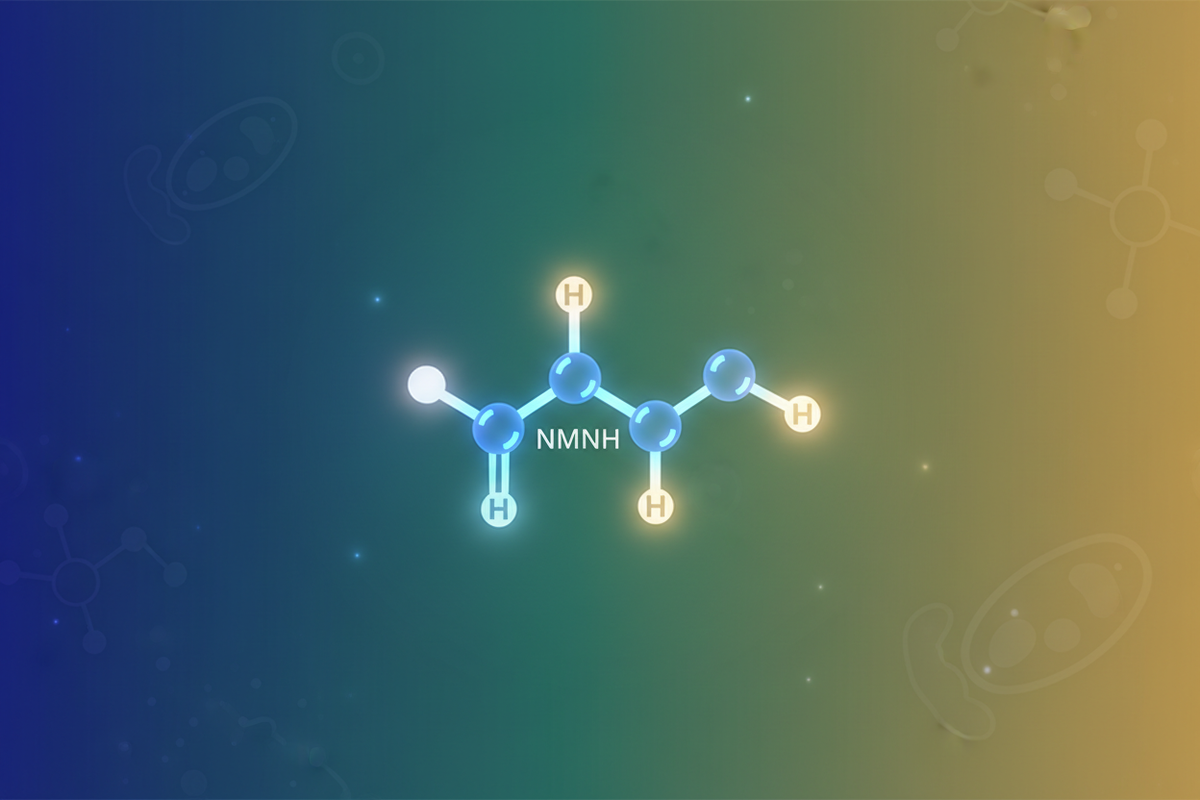
- NMNH (Reduced NMN) — A newer, more stable form of NMN showing emerging evidence of faster NAD+ elevation
- Liposomal NAD+ — A liposomal delivery format for enhanced absorption across the gut barrier
Lifestyle interventions also matter:
- Exercise — Both aerobic and resistance training increase NAMPT activity, the rate-limiting enzyme in NAD+ biosynthesis
- Caloric restriction / intermittent fasting — Associated with higher NAD+ levels and sirtuin activation
- Quality sleep — NAD+ metabolism is tied to circadian rhythm; disrupted sleep accelerates depletion
The Bottom Line
NAD+ is not a wellness trend. It is a fundamental molecule without which your cells cannot produce energy, repair DNA, or regulate metabolism. Its decline with age is measurable, documented, and biologically significant.
The emerging science around NAD+ precursors — NMN, NMNH, and NR — represents one of the more credible areas of longevity research today. While no supplement replaces foundational health habits, the evidence for supporting NAD+ levels is growing steadily.
Understanding what NAD+ does is the first step. What you do with that information is up to you.
This article is for informational purposes only and is not intended as medical advice. Consult a qualified healthcare provider before starting any supplement regimen.