







Why Is NAD+ Important for Cellular Health?
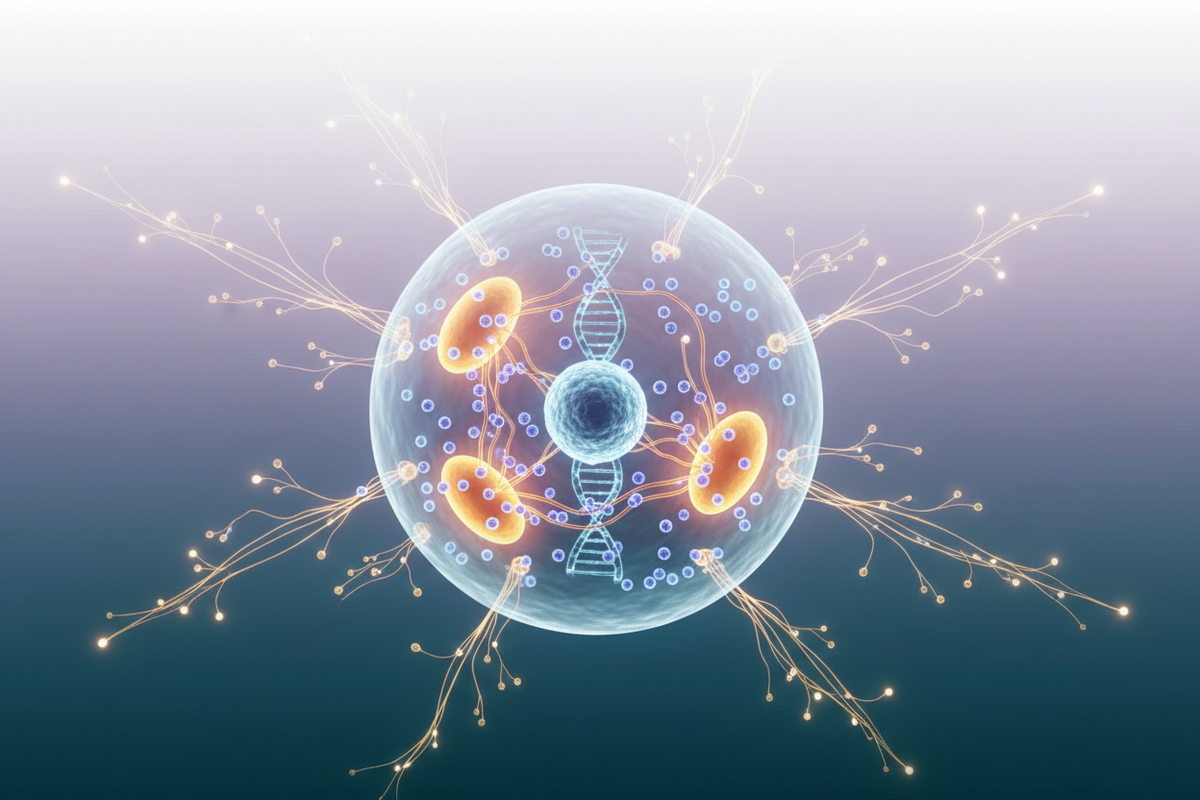
Inside every cell, a quiet molecule is keeping everything running. Here’s why NAD+ is non-negotiable for cellular function.
The Cell Is a Machine. NAD+ Is the Power Grid.
To understand why NAD+ matters, you first have to appreciate what your cells are actually doing at any given moment.
Right now, your body contains roughly 37 trillion cells. Each one is simultaneously managing energy production, responding to signals, repairing damage, regulating protein activity, and deciding whether to divide, rest, or die. These aren’t passive structures — they’re extraordinarily complex systems running thousands of processes in parallel, every second of the day.
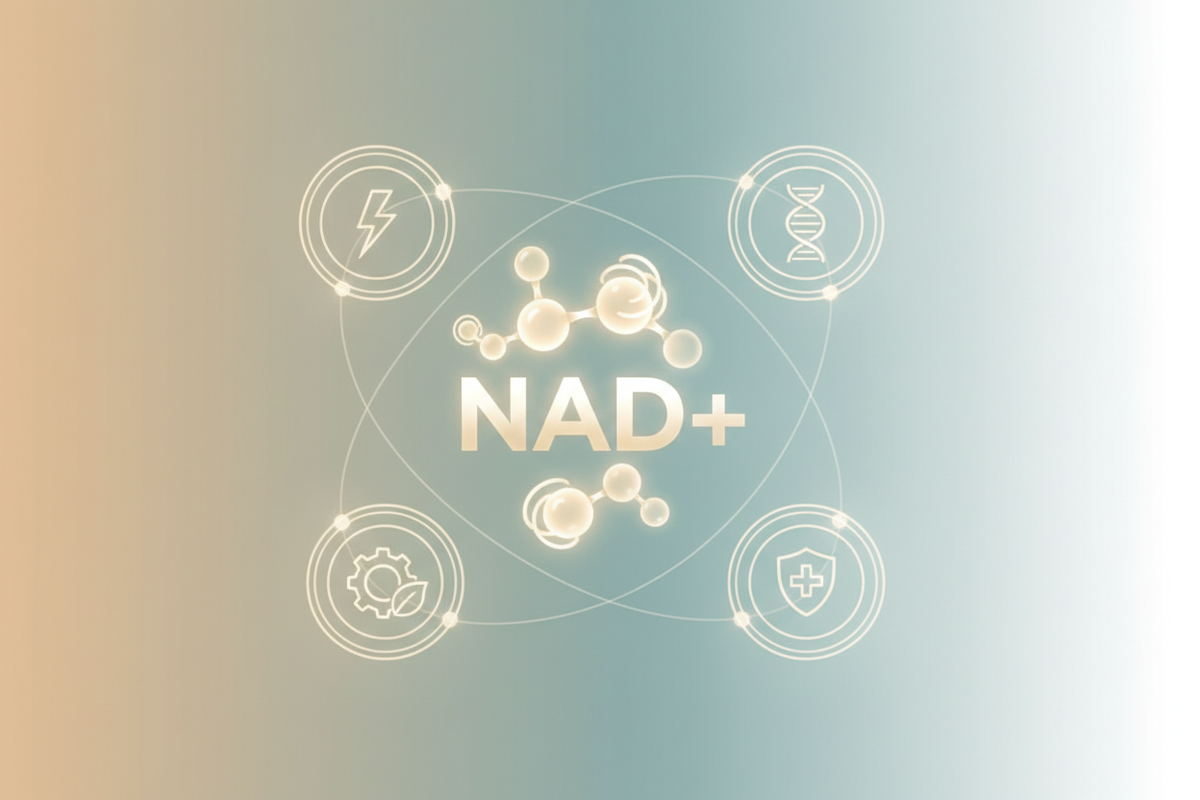
NAD+ (nicotinamide adenine dinucleotide) sits at the center of almost all of it. It’s a coenzyme — a helper molecule — that enzymes across your cells depend on to function. Without it, cellular machinery doesn’t just slow down. It stops.
What “Cellular Health” Actually Means
Before diving into NAD+, it helps to define the term. Cellular health refers to a cell’s ability to:
- Produce sufficient energy to carry out its specialized functions
- Maintain genomic integrity — keeping DNA intact and accurately replicated
- Respond appropriately to stress without triggering unnecessary inflammation or cell death
- Communicate effectively with neighboring cells and the broader system
- Renew and quality-control its own components through processes like autophagy and mitophagy
When these functions degrade — due to aging, oxidative stress, nutrient deficiency, or environmental damage — cellular health declines. And when enough cells decline, tissues and organs follow. NAD+ is involved in every single one of these functions.
NAD+ and Cellular Function: The Core Roles
Energy: The ATP Connection
Cells run on ATP (adenosine triphosphate). Making ATP requires NAD+.
In the mitochondria, NAD+ acts as an electron shuttle in the electron transport chain — picking up electrons from metabolized nutrients and delivering them to drive ATP synthesis. This process, called oxidative phosphorylation, is responsible for generating the majority of cellular energy in aerobic organisms.
A cell deprived of NAD+ cannot sustain this process. Energy output drops, and with it, the cell’s ability to do its job — whether that’s contracting a muscle fiber, firing a neuron, or producing a hormone.
Data point: The mitochondria of a typical human cell can produce approximately 100–150 molecules of ATP per second when NAD+ availability is optimal. That rate drops measurably as NAD+ declines.
Genomic Integrity: Keeping DNA Intact
Every human cell experiences an estimated 10,000 to 1,000,000 DNA lesions per day — caused by UV radiation, oxidative damage, replication errors, and environmental exposures.
NAD+ is the primary fuel for PARP enzymes (Poly ADP-Ribose Polymerases), which detect and repair DNA strand breaks. When PARPs activate in response to damage, they consume NAD+ rapidly to build repair structures around the break site.
Without sufficient NAD+, PARP activity is impaired, DNA damage accumulates, and cells either malfunction, enter senescence, or trigger apoptosis (programmed cell death).
Data point: PARP1 alone can consume up to 80% of cellular NAD+ during a high-damage event — creating a direct competition between energy production and DNA repair that becomes harder to sustain as NAD+ declines with age.
Sirtuin Activation: The Longevity Proteins
Sirtuins are a family of seven proteins (SIRT1–SIRT7) that regulate gene expression, stress resistance, inflammation, and mitochondrial quality control. Every sirtuin is NAD+-dependent. They cannot function without it.
| Sirtuin | Primary Location | Key Function |
|---|---|---|
| SIRT1 | Nucleus / Cytoplasm | Gene regulation, insulin sensitivity, fat metabolism |
| SIRT2 | Cytoplasm | Cell cycle regulation, genomic stability |
| SIRT3 | Mitochondria | Mitochondrial energy metabolism, ROS management |
| SIRT4 | Mitochondria | Fatty acid oxidation, amino acid metabolism |
| SIRT5 | Mitochondria | Ammonia detoxification, metabolic regulation |
| SIRT6 | Nucleus | DNA repair, telomere maintenance, inflammation |
| SIRT7 | Nucleus | rRNA transcription, stress response |
When NAD+ levels fall, sirtuin activity falls with it — with downstream consequences across nearly every aspect of cellular maintenance.
Redox Balance: Managing Oxidative Stress
NAD+ exists in two forms: the oxidized form (NAD+) and the reduced form (NADH). The ratio between them — the NAD+/NADH ratio — is a critical indicator of cellular metabolic health.
A healthy NAD+/NADH ratio supports efficient mitochondrial function, keeps oxidative stress in check by maintaining antioxidant enzyme activity, and signals the cell to remain metabolically active. When this ratio becomes skewed, cells shift toward a dysfunctional metabolic state associated with metabolic syndrome, neurodegeneration, and accelerated aging.
Cellular Communication and Quality Control
- CD38 signaling — CD38 degrades NAD+ to produce cADPR, a messenger involved in calcium regulation and immune response. CD38 activity increases with age and inflammation, becoming a primary driver of NAD+ depletion in older cells.
- Autophagy regulation — SIRT1 (NAD+-dependent) activates autophagy pathways that clear damaged proteins and organelles. Reduced NAD+ means slower cellular housekeeping and accumulation of cellular debris.
- Mitophagy — The selective removal of damaged mitochondria is linked to NAD+/sirtuin signaling. Impaired mitophagy is increasingly implicated in neurodegenerative and metabolic diseases.
The Age Factor: Why NAD+ Decline Matters
| Decade | Estimated NAD+ Level (relative to young adult baseline) |
|---|---|
| 20s | ~100% |
| 30s | ~85% |
| 40s | ~65–70% |
| 50s | ~50–55% |
| 60s | ~40–45% |
| 70s+ | ~25–35% |
Based on aggregate tissue and blood NAD+ measurements across published studies; individual variation applies.
This decline is driven by increased PARP consumption from accumulated DNA damage, rising CD38 activity from chronic low-grade inflammation, and a gradual reduction in biosynthetic capacity as the salvage pathway becomes less efficient.
What Supports Cellular NAD+ Levels?
Precursor supplementation:
- NMN (Nicotinamide Mononucleotide) — Converts directly to NAD+ in one enzymatic step; multiple human trials confirm meaningful blood NAD+ increases
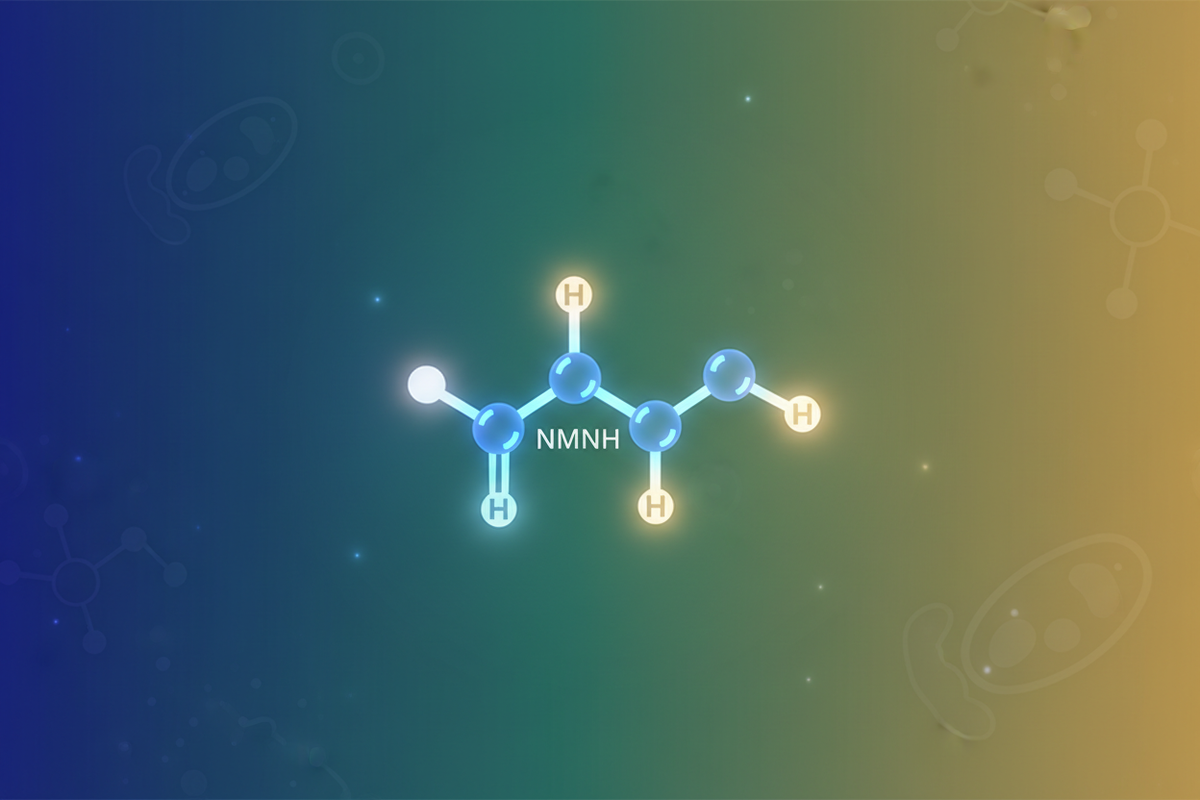
- NMNH (Reduced NMN) — A more stable, reduced form of NMN with early evidence of faster NAD+ elevation
- NR (Nicotinamide Riboside) — Well-studied precursor with a robust published record in humans
Lifestyle factors:
- Exercise — Upregulates NAMPT, the rate-limiting enzyme in the NAD+ salvage pathway
- Intermittent fasting / caloric restriction — Associated with increased NAD+ biosynthesis and sirtuin activation
- Avoiding chronic alcohol use — Alcohol metabolism consumes NAD+ and disrupts the NAD+/NADH ratio significantly
- Sleep quality — NAD+ metabolism is regulated by circadian rhythm; poor sleep disrupts replenishment cycles
The Bottom Line
NAD+ isn’t one thing your cells use. It’s the molecule that makes cellular function possible at a systems level — from the energy that powers every process, to the enzymes that protect your genome, to the proteins that keep your cells responsive and resilient.
Its decline with age is not incidental. It is one of the more well-documented molecular events in human aging, with direct consequences for how well your cells function over time.
The science is still evolving, but the foundational biology is not in question: healthy cells need NAD+, and supporting its levels is one of the more evidence-grounded strategies in the longevity space today.
This article is for informational purposes only and is not intended as medical advice. Consult a qualified healthcare provider before starting any supplement regimen.