







What Is NMNH?
The next-generation NAD+ precursor — more stable, faster-absorbing, and backed by emerging science.
The Basics
NMNH (Nicotinamide Mononucleotide Hydride, also known as Reduced NMN) is a reduced form of NMN — one of the most studied NAD+ precursors in longevity research. While NMN has gained significant attention over the past decade, NMNH represents a newer iteration: chemically more stable, and showing early evidence of superior bioavailability.
Like NMN, NMNH is a direct precursor to NAD+. But the “H” makes a meaningful difference at the molecular level.
NMNH vs. NMN: What’s the “H”?
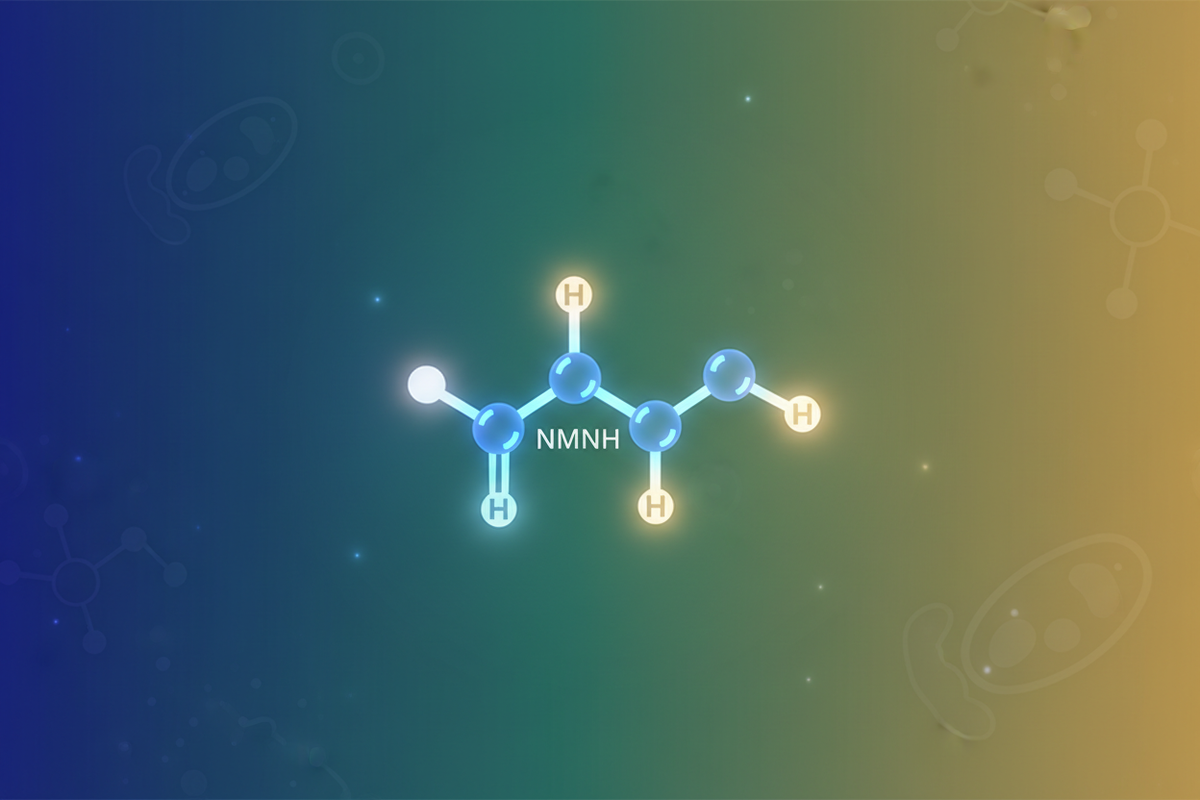
The “H” in NMNH stands for hydride — an extra hydrogen atom attached to the nicotinamide ring. This seemingly small modification changes how the molecule behaves in the body:
| NMN | NMNH | |
|---|---|---|
| Full name | Nicotinamide Mononucleotide | Nicotinamide Mononucleotide Hydride |
| Oxidation state | Oxidized form | Reduced form |
| Chemical stability | Moderate | Higher — more resistant to degradation |
| NAD+ conversion | Direct (one step) | Direct (one step) |
| Bioavailability | Good | Emerging evidence of superior uptake |
| Research maturity | Extensive human trials | Early-stage but promising |
Both convert to NAD+ through the same biosynthesis pathway, but NMNH’s reduced state may allow it to enter cells more efficiently and resist breakdown in the digestive tract.
What Does NMNH Do in the Body?
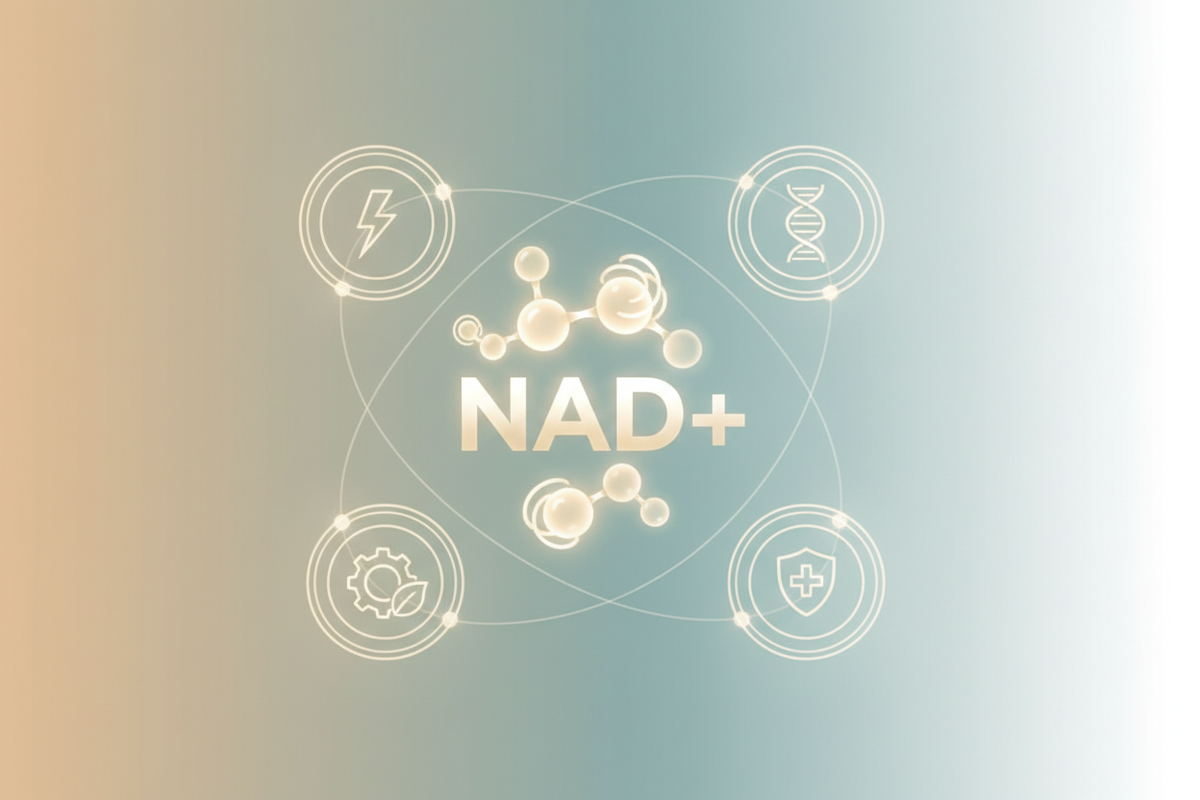
Once absorbed, NMNH follows the same pathway as NMN — it’s converted into NAD+ via the enzyme NMNAT. That means it supports the same core biological functions:
- Mitochondrial energy production — Fueling ATP synthesis so your cells can operate at peak capacity
- DNA damage repair — Activating PARP enzymes to detect and correct strand breaks
- Sirtuin activation — Supporting longevity-linked proteins that regulate inflammation, metabolism, and stress response
- Cellular redox balance — As a reduced molecule, NMNH may contribute directly to the cell’s antioxidant capacity beyond just raising NAD+ levels
Why NMNH? The Case for the Reduced Form
The supplement industry has been evolving from NR → NMN → NMNH as researchers identify increasingly efficient delivery mechanisms for NAD+ repletion. Here’s why NMNH is generating interest:
- Stability advantage — NMNH is less prone to oxidation during manufacturing and storage, which can preserve potency through the supply chain
- Faster NAD+ elevation — Preliminary data suggests NMNH may raise NAD+ levels more rapidly than standard NMN at equivalent doses
- Dual benefit hypothesis — Some researchers propose that NMNH’s reduced state may offer antioxidant effects independent of NAD+ conversion, though more human data is needed to confirm this
What the Research Says
NMNH research is still in its early stages compared to NMN and NR, but the initial findings are encouraging:
- Preclinical studies have shown NMNH effectively raises NAD+ in tissue and blood with good tolerability
- Comparative studies suggest NMNH may outperform NMN in speed of NAD+ elevation in animal models
- Human trials are underway, with the scientific community watching closely as data matures
As with all emerging longevity supplements, the science is promising but not yet conclusive. Peer-reviewed human trials at scale are still needed.
Who Might Consider NMNH?
NMNH is most relevant for:
- Those already familiar with NMN or NR looking to explore next-generation options
- Individuals prioritizing formulation quality and ingredient stability
- Longevity-focused consumers who track emerging research closely
It is not a replacement for foundational health habits — sleep, exercise, and diet remain the most evidence-backed ways to support NAD+ metabolism.
The Bottom Line
NMNH is an exciting development in the NAD+ precursor space — a more stable, potentially more bioavailable evolution of NMN. While the research is still catching up to the enthusiasm, its molecular profile and early data make it a compelling ingredient to watch.
If NMN was the breakthrough, NMNH may be the refinement.
This article is for informational purposes only and is not intended as medical advice. Consult a qualified healthcare provider before starting any supplement regimen.