







What Are the Benefits of NAD+?
A look at the potential benefits of NAD+ and its role in supporting cellular function — grounded in current research.
A Note on Language
NAD+ is a coenzyme, not a drug. The research around it is growing rapidly, but much of it remains in early stages — particularly in humans. This article uses careful language for a reason: terms like “may support,” “is associated with,” and “preliminary evidence suggests” reflect the actual state of the science. That’s not hedging. That’s accuracy.
What Is NAD+ and Why Does It Matter?
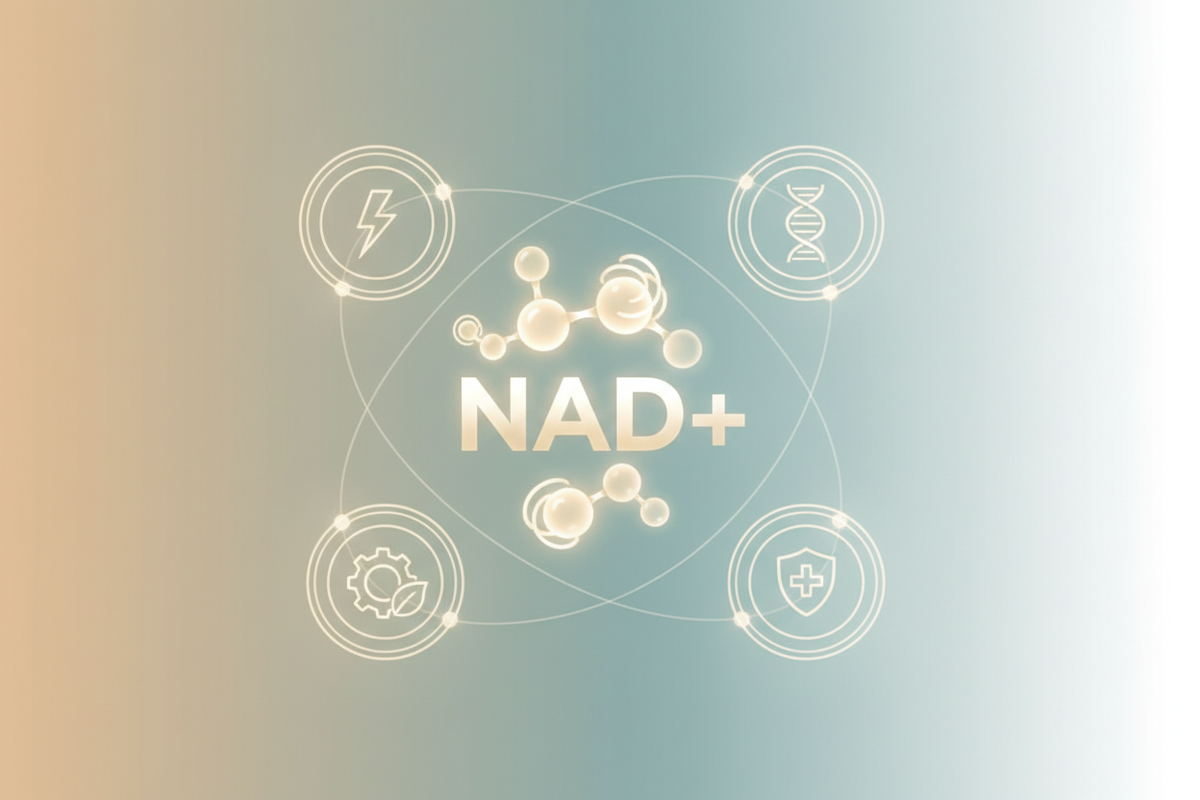
NAD+ (nicotinamide adenine dinucleotide) is a coenzyme found in every living cell. It participates in over 500 enzymatic reactions and is central to energy metabolism, DNA maintenance, and cellular signaling.
NAD+ levels decline with age — by an estimated 40–60% between young adulthood and middle age — and this decline is associated with reduced cellular efficiency across multiple biological systems. Supporting NAD+ levels is an active area of research in the context of healthy aging and metabolic function.
Potential Benefits: What the Research Suggests
1. May Support Cellular Energy Metabolism
NAD+ is required for the mitochondrial electron transport chain, the primary mechanism by which cells convert nutrients into ATP — the energy currency of the cell.
When NAD+ availability declines, mitochondrial efficiency is reduced. Preclinical and early human studies suggest that restoring NAD+ levels through precursor supplementation (NMN, NR) may help support mitochondrial function and energy metabolism, particularly in older adults.
Research context: A 2023 randomized controlled trial published in Nature Aging found that NMN supplementation in healthy older adults was associated with increased muscle NAD+ levels and improvements in physical performance metrics. Results varied across individuals.
2. May Play a Role in DNA Repair Processes
NAD+ is the primary substrate for PARP enzymes, which are responsible for detecting and repairing DNA strand breaks. Adequate NAD+ availability is considered necessary for efficient DNA damage response.
As NAD+ declines with age, PARP function may become less efficient, potentially allowing DNA damage to accumulate at a faster rate. Whether supplementing NAD+ precursors meaningfully improves DNA repair outcomes in humans remains an area of active investigation.
Important note: This is a mechanistic observation, not a clinical claim. The relationship between supplemental NAD+ precursors and measurable DNA repair outcomes in healthy humans has not been conclusively established in large-scale trials.
3. Associated With Sirtuin Activity and Longevity Pathways
Sirtuins (SIRT1–SIRT7) are a family of NAD+-dependent proteins involved in regulating gene expression, inflammation, stress response, and mitochondrial quality control. They are among the most studied proteins in longevity research.
Because sirtuins require NAD+ to function, declining NAD+ levels are associated with reduced sirtuin activity. Preclinical models have shown that maintaining or restoring NAD+ can preserve sirtuin function — though translating these findings to human longevity outcomes requires considerably more research.
4. May Support Healthy Metabolic Function
NAD+ plays a direct role in glycolysis, the citric acid cycle, and oxidative phosphorylation — the three central pathways of energy metabolism. It also regulates SIRT1 and SIRT3, which influence insulin sensitivity, fat oxidation, and mitochondrial biogenesis.
Early human trials of NAD+ precursors have shown associations with improvements in metabolic markers in specific populations, including individuals with metabolic syndrome or obesity. These results are preliminary and should not be generalized broadly.
Research context: A 2021 randomized placebo-controlled trial found that NMN supplementation in postmenopausal women with prediabetes improved muscle insulin sensitivity and gene expression related to muscle remodeling. Sample sizes were small; replication is needed.
5. Potential Role in Supporting Cognitive Function
NAD+ is highly concentrated in brain tissue, where it supports neuronal energy production, DNA repair, and the activity of neuroprotective sirtuins (particularly SIRT1 and SIRT3).
Preclinical data suggests that NAD+ depletion may contribute to neuronal vulnerability, and that restoring NAD+ levels could have neuroprotective effects. Human clinical evidence in this area is limited and largely observational at this stage.
Important note: No NAD+ precursor supplement has been approved to treat, prevent, or reverse any neurological condition. Cognitive health claims in this space should be interpreted with caution.
6. May Support Muscle Function and Physical Recovery
NAD+ supports mitochondrial efficiency in muscle cells, which directly affects endurance, recovery, and overall physical performance. Some human trials have shown that NMN supplementation is associated with improvements in aerobic capacity and muscle strength in older adults.
These findings are promising but early. Effects appear to be more pronounced in individuals with lower baseline NAD+ levels — typically older adults or those with metabolic dysfunction.
What the Research Does Not Yet Support
Being clear about limitations is as important as presenting benefits. The current evidence does not yet support claims that NAD+ supplementation:
- Reverses aging in humans (preclinical models are not directly transferable)
- Treats or prevents disease — NAD+ precursors are dietary supplements, not medications
- Produces uniform results across all individuals or age groups
- Works independently of lifestyle factors like diet, sleep, and exercise
Factors That Influence NAD+ Levels
| Factor | Effect on NAD+ |
|---|---|
| Aerobic exercise | Upregulates NAMPT; increases NAD+ biosynthesis |
| Resistance training | Activates SIRT1/SIRT3 via NAD+ pathway |
| Intermittent fasting | Associated with increased NAD+ and sirtuin activation |
| Chronic alcohol use | Consumes NAD+; disrupts NAD+/NADH ratio |
| Poor sleep | Disrupts circadian NAD+ replenishment cycles |
| Aging | Increases CD38/PARP consumption; reduces salvage pathway efficiency |
NAD+ Precursors: The Supplement Landscape
Since oral NAD+ has poor bioavailability, supplementation focuses on precursors that convert into NAD+ inside the cell:
- NMN (Nicotinamide Mononucleotide) — Converts to NAD+ in one enzymatic step; has the most robust recent human trial data
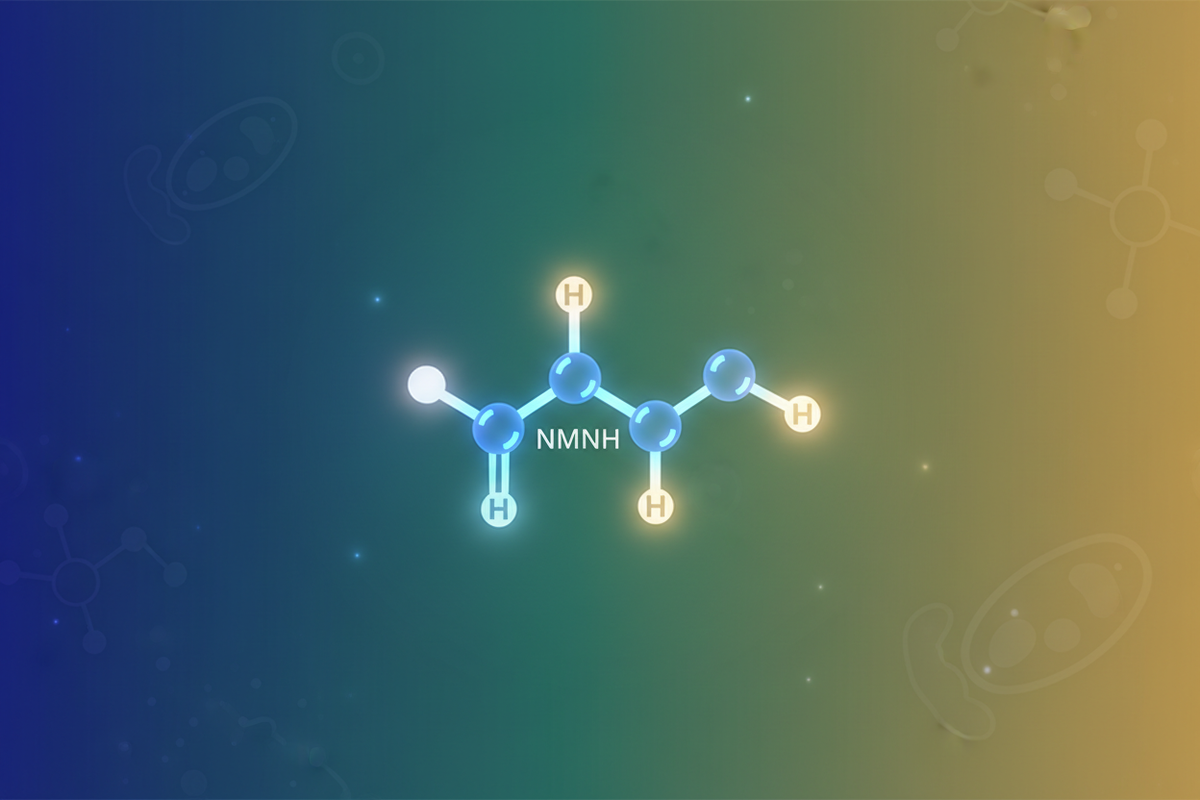
- NMNH (Reduced NMN) — A more stable, reduced form showing early evidence of faster NAD+ elevation and potentially superior bioavailability
- NR (Nicotinamide Riboside) — Well-studied with multiple published human trials; converts to NMN, then to NAD+
Formulation quality, dose, and delivery format all influence how effectively these precursors raise cellular NAD+ levels.
The Bottom Line
NAD+ plays a foundational role in cellular energy, DNA maintenance, metabolic regulation, and cellular signaling. Its decline with age is well-documented, and the emerging research on NAD+ precursors represents one of the more scientifically credible areas of the longevity supplement space.
The potential benefits are meaningful and worth understanding — as long as they’re understood accurately, in the context of what the science actually supports today.
This article is for informational purposes only and is not intended as medical advice. These statements have not been evaluated by the Food and Drug Administration. This product is not intended to diagnose, treat, cure, or prevent any disease. Consult a qualified healthcare provider before starting any supplement regimen.