







What Is NAD+?

The molecule your cells can't live without — and why it declines with age.
The Basics
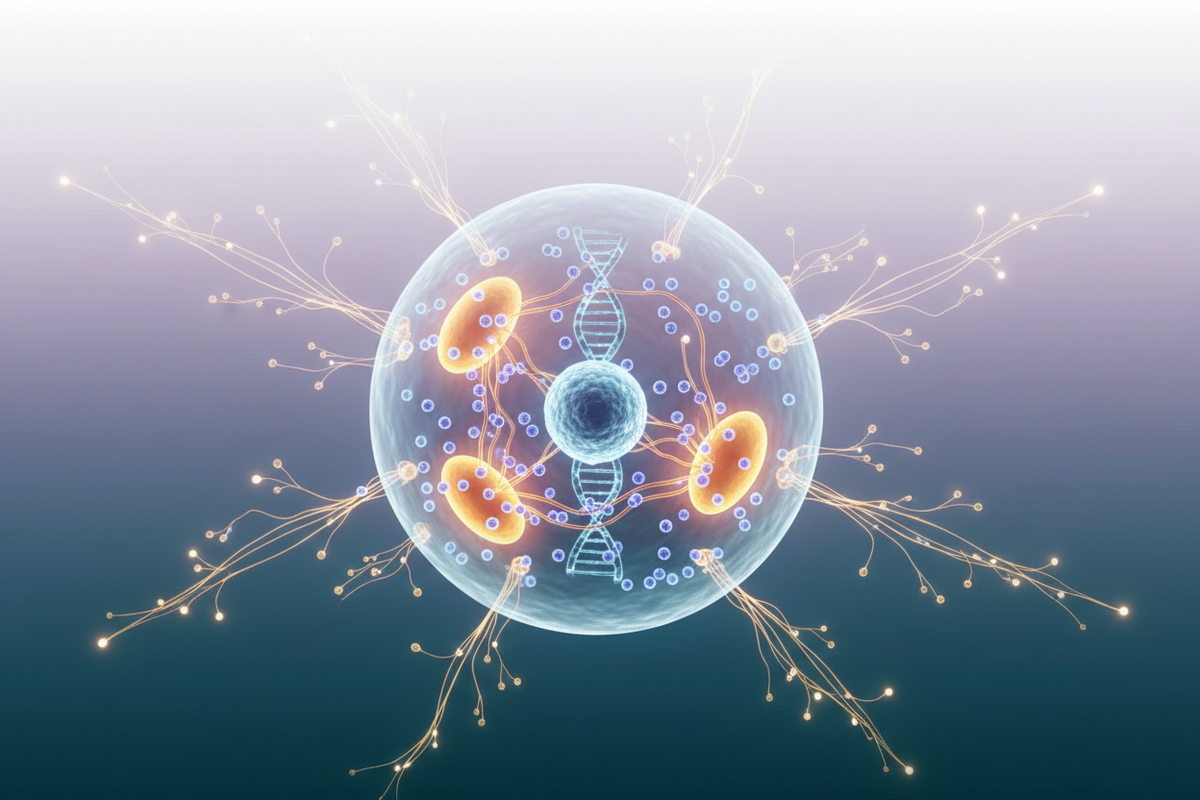
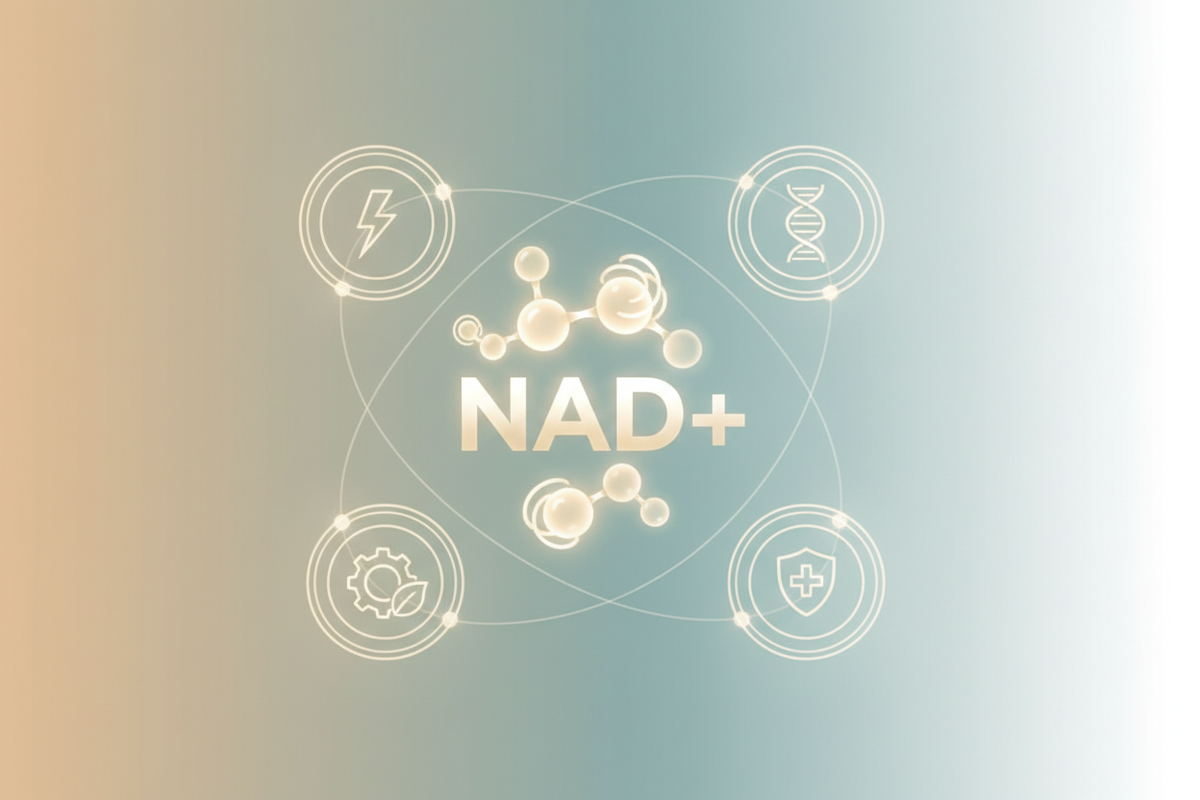
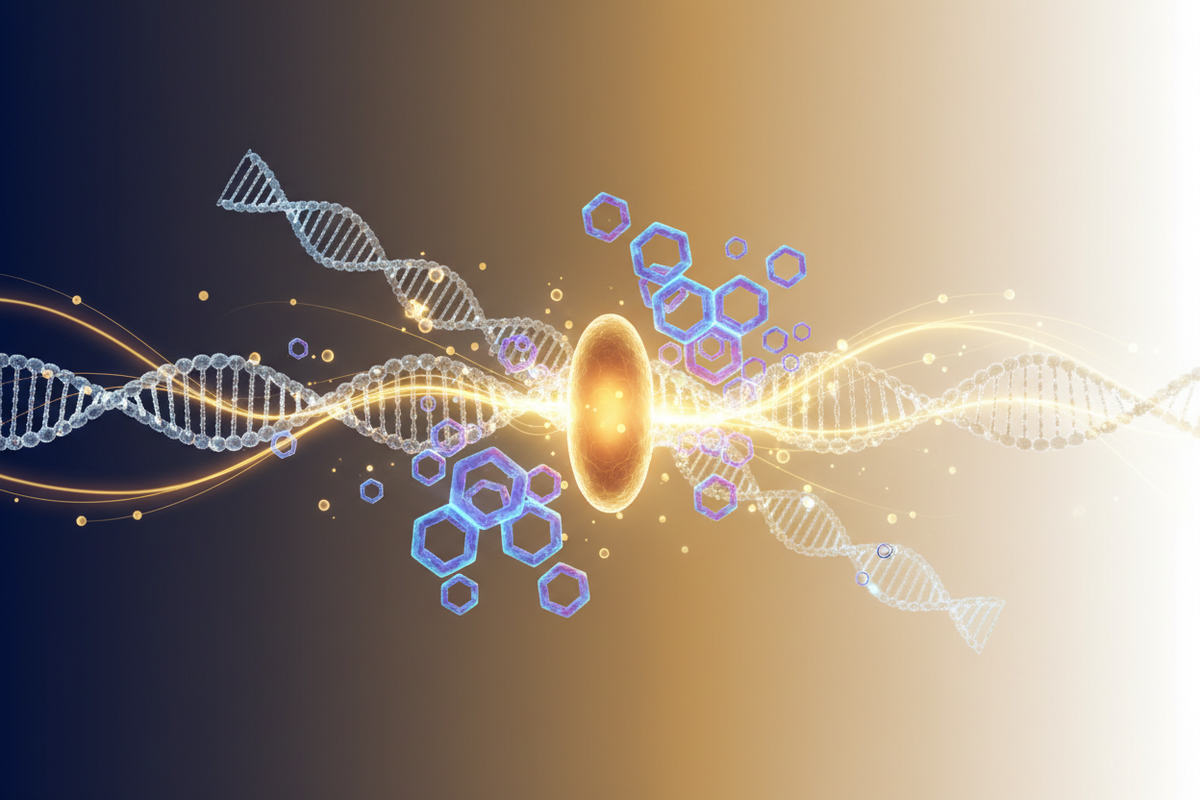
NAD+ (nicotinamide adenine dinucleotide) is a coenzyme found in every living cell in your body. Think of it as a molecular currency your cells use to carry out thousands of essential functions — from converting food into energy to repairing damaged DNA.
Without NAD+, your cells simply can't do their jobs. It's that fundamental.
What Does NAD+ Actually Do?
NAD+ plays a central role in several critical biological processes:
- Energy production — NAD+ is essential to the mitochondrial process that converts nutrients into ATP, the fuel your cells run on.
- DNA repair — It activates enzymes called PARPs that detect and fix DNA damage caused by stress, UV exposure, and everyday wear.
- Cellular defense — NAD+ fuels sirtuins, a family of proteins linked to longevity, inflammation regulation, and metabolic health.
- Circadian rhythm regulation — It helps keep your body's internal clock in sync, affecting sleep quality and metabolic timing.
Why NAD+ Declines With Age
Here's the part that matters most: your NAD+ levels drop significantly as you get older. Research shows that by middle age, NAD+ levels may be 50% lower than in young adulthood — and the decline continues from there.
This drop is associated with:
- Decreased energy and stamina
- Slower recovery from physical activity
- Cognitive fog and reduced mental clarity
- Greater vulnerability to age-related metabolic changes
Can You Boost NAD+ Levels?
You can't take NAD+ directly as a supplement — it doesn't absorb well through the gut. Instead, researchers have focused on NAD+ precursors: compounds your body converts into NAD+. The two most studied are:
- NMN (Nicotinamide Mononucleotide) — A direct precursor that enters the NAD+ biosynthesis pathway efficiently.
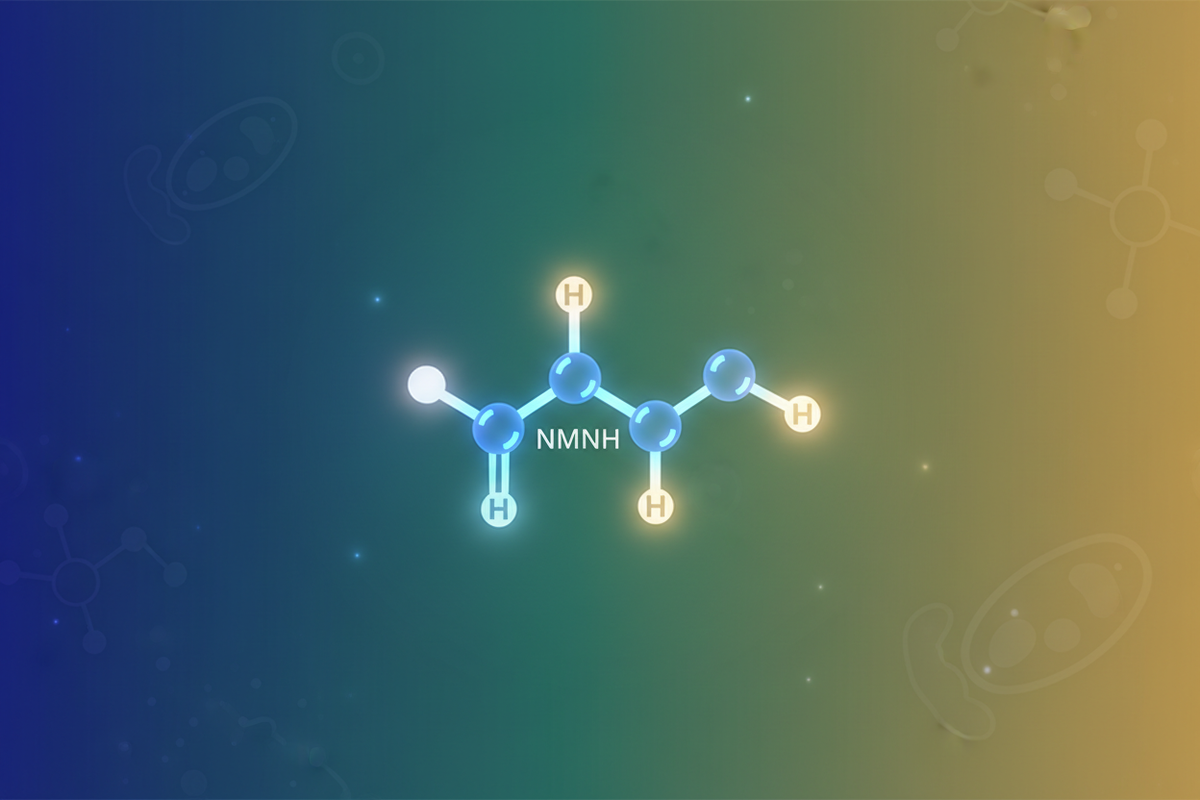
- NMNH (Reduced NMN) — A newer, more stable form showing promising bioavailability data in early research.
- NR (Nicotinamide Riboside) — A well-researched precursor with multiple published human trials.
Lifestyle factors also matter: regular exercise, caloric restriction, and quality sleep all support healthy NAD+ metabolism.
NAD+ vs. NMN: What's the Difference?
NAD+ and NMN are closely related, but they're not the same thing. NAD+ is the active coenzyme your cells use directly, while NMN is a precursor — a building block your body converts into NAD+.
| NAD+ | NMN | |
|---|---|---|
| Role in the body | Active coenzyme | Precursor to NAD+ |
| Oral bioavailability | Poor — degrades in the gut | High — absorbed efficiently |
| Conversion required | No | Yes (one step) |
| Research stage | Foundational science | Growing human trials |
The practical takeaway: Taking NAD+ directly as a supplement is largely ineffective. NMN bypasses this limitation by entering cells and converting to NAD+ rapidly — making it the preferred delivery strategy for raising NAD+ levels in the body.
NAD+ vs. NR: Which Precursor Is Better?
NR (Nicotinamide Riboside) is another well-known NAD+ precursor and is often compared to NMN. Both raise NAD+ levels, but they differ in their conversion pathway, molecular size, and research depth.
| NMN | NR | |
|---|---|---|
| Molecular size | Larger | Smaller |
| Conversion pathway | Converts to NAD+ in one step | Converts to NMN first, then to NAD+ |
| Bioavailability | High; some evidence of direct cellular uptake | Well-established across multiple trials |
| Human clinical data | Growing rapidly | More extensive published record |
| Stability | NMNH form offers improved stability | Standard NR is relatively stable |
The practical takeaway: NR has a longer published research record, but NMN — especially in its reduced form (NMNH) — is closing the gap fast. Both are legitimate options; the choice often comes down to dosage, formulation quality, and individual response.
The Bottom Line
NAD+ isn't a buzzword — it's fundamental biochemistry. The science around NAD+ precursors is evolving rapidly, with growing clinical interest in their role in healthy aging, metabolic function, and cellular resilience.
If you're serious about longevity and cellular health, understanding NAD+ is a good place to start.
This article is for informational purposes only and is not intended as medical advice. Consult a qualified healthcare provider before starting any supplement regimen.