






Mitophagy Explained: How Cells Maintain Mitochondrial Health

Understanding the Natural Cellular Recycling Process Behind Urolithin A Research
There's something interesting about the way our bodies maintain themselves. Even when we're resting, sleeping, or going about an ordinary day, our cells are constantly replacing, repairing, and recycling their components.
Mitochondria are part of that ongoing process.
You may remember them from biology class as the "powerhouses of the cell." That's still a useful description, but mitochondria do considerably more than produce energy. They also participate in cellular signaling, metabolism, and several processes involved in maintaining normal cell function.
Like other structures in the body, mitochondria experience wear and tear. Some become less efficient, accumulate damage, or stop functioning as they should.
This is where a process called mitophagy comes in.
It has become an important subject in mitochondrial health research, particularly as scientists investigate how cells maintain their internal quality-control systems over time.
What Exactly Is Mitophagy?
Mitophagy is a specialized form of autophagy.
Autophagy is the natural process through which cells break down and recycle unwanted or damaged components. The word itself comes from Greek roots meaning "self-eating," although recycling is probably a more helpful way to think about it.
Mitophagy applies this process specifically to mitochondria.
When a mitochondrion becomes damaged or dysfunctional, the cell can identify it and direct it toward a cellular recycling system. The mitochondrion is enclosed in a membrane structure called an autophagosome, which eventually fuses with a lysosome.
Lysosomes contain enzymes that break down cellular material. Once the damaged mitochondrial components are processed, some of their building blocks can be reused.
It's a remarkably organized process.
And importantly, mitophagy isn't something that happens only when cells are under severe stress. It is part of normal mitochondrial maintenance, helping cells manage their mitochondrial population as conditions change.
How Do Cells Know Which Mitochondria Need Attention?
This is where the biology gets particularly interesting.
Mitochondria exist as dynamic structures that continually change shape, divide, and connect with one another. This activity is known as mitochondrial dynamics.
Sometimes a damaged section can be separated from the larger mitochondrial network through a process called fission. That helps the cell manage individual mitochondrial components rather than treating the entire network as one unit.
One well-studied pathway involved in identifying damaged mitochondria is the PINK1/Parkin pathway.
Under normal conditions, the protein PINK1 is imported into healthy mitochondria and processed. When a mitochondrion loses its membrane potential, an important indicator of mitochondrial dysfunction, this process is disrupted.
PINK1 can then accumulate on the outer mitochondrial membrane.
It helps recruit and activate another protein called Parkin, which marks mitochondrial surface proteins with ubiquitin. These molecular tags help signal that the damaged mitochondrion should be recognized by the cellular recycling machinery.
The autophagy system can then capture the marked mitochondrion and deliver it toward lysosomal degradation.
There are other pathways involved, too. Proteins such as BNIP3, NIX, and FUNDC1 can help connect mitochondria with the autophagy machinery through receptor-mediated mechanisms.
So PINK1 and Parkin are important players, but they aren't the entire story.
Researchers continue to investigate how these pathways interact and how different cells regulate mitochondrial quality control.
For a deeper look at mitochondrial quality-control mechanisms, the review Mitochondrial Quality Control in Health and in Parkinson's Disease, published in Physiological Reviews, provides a detailed explanation of these pathways.
Why Does This Process Matter as We Get Older?
A useful way to think about mitochondrial health is to consider both the mitochondria a cell has and how well it maintains them.
A cell may contain many mitochondria, but simply having more doesn't necessarily mean those mitochondria are functioning efficiently.
Over time, changes in mitochondrial function and cellular maintenance can become more noticeable in tissues with high energy demands, including skeletal muscle, the heart, and the brain.
This is one reason mitochondrial quality control has attracted attention in healthy-aging research.
Scientists are particularly interested in whether changes in mitophagy contribute to the accumulation of dysfunctional mitochondria during aging.
However, aging is complicated. Mitochondrial changes are influenced by genetics, physical activity, nutrition, metabolic health, and many other factors.
Mitophagy is one part of that picture, not a single explanation for everything that happens to cells as we grow older.
Mitophagy and Mitochondrial Biogenesis Work Together
There's another distinction worth understanding.
Mitophagy is sometimes discussed alongside mitochondrial biogenesis, but the two processes do different things.
Mitophagy helps remove and recycle mitochondria that are no longer functioning properly.
Mitochondrial biogenesis is the process through which cells create new mitochondria.
Both contribute to mitochondrial maintenance.
Think about it this way: a healthy maintenance system needs to manage older equipment while also maintaining the capacity to replace it. Focusing exclusively on removal or exclusively on production would leave part of the picture out.
Exercise is a particularly interesting example because physical activity can influence both sides of this process.
Research has shown that exercise can stimulate mitochondrial adaptations in skeletal muscle, including changes in mitochondrial turnover, function, and biogenesis.
This is one reason regular physical activity remains such an important part of maintaining muscle and metabolic health.
It also explains why supplements should be considered alongside established lifestyle habits rather than as replacements for them.
Where Does Urolithin A Fit Into Mitophagy Research?
Urolithin A has attracted attention because researchers have investigated its potential to influence mitophagy.
It is a metabolite that can be produced when gut bacteria process ellagitannins and ellagic acid found in certain plant foods, including pomegranates and walnuts.
Natural production varies between individuals, which is one reason direct Urolithin A supplementation has become an area of interest.
In laboratory and animal studies, Urolithin A has been associated with improved mitochondrial maintenance and mitophagy-related activity.
But what about humans?
A particularly interesting study was published in Cell Reports Medicine in May 2022.
Researchers conducted a randomized, placebo-controlled trial involving 88 middle-aged adults. Participants received either 500 mg or 1,000 mg of Urolithin A daily, or a placebo, over four months.
The researchers collected skeletal muscle samples and examined changes in proteins and biological pathways associated with mitochondrial function.
Among their findings, the team observed changes involving the PINK1/Parkin pathway, including increased phosphorylated Parkin at the 500 mg dose.
They also identified changes in proteins associated with mitochondrial metabolism.
These findings are relevant because they provide human muscle-tissue evidence that Urolithin A supplementation can influence molecular pathways associated with mitochondrial maintenance.
However, there is an important scientific distinction here.
Measuring changes in proteins associated with mitophagy is not identical to directly measuring the complete rate of mitochondrial removal and recycling inside living human muscle.
The findings support further investigation, but they do not establish that supplementation produces a specific amount of mitophagy in every person or guarantees better cellular function.
You can read the original research here: Urolithin A and Mitochondrial Health in Middle-Aged Adults – Cell Reports Medicine.
Can You Support Your Body's Natural Mitochondrial Maintenance?
There isn't one food or supplement that takes care of mitochondrial health on its own.
The fundamentals are still fairly familiar.
Regular physical activity, particularly a combination of aerobic exercise and resistance training, helps maintain healthy muscle and supports normal metabolic function.
A balanced diet provides the nutrients needed for everyday cellular processes. Getting enough protein, eating a variety of vegetables and fruits, and including sources of healthy fats are all reasonable parts of that foundation.
Sleep and recovery matter as well. Cells are constantly responding to changes in energy demand, nutrient availability, and physiological stress.
The research into mitophagy adds another layer to our understanding of how these everyday habits may interact with cellular maintenance.
It's a fascinating area, but there's still much to learn about how different lifestyle factors influence mitophagy in humans.
Exploring the inGreens Urolithin A Complex
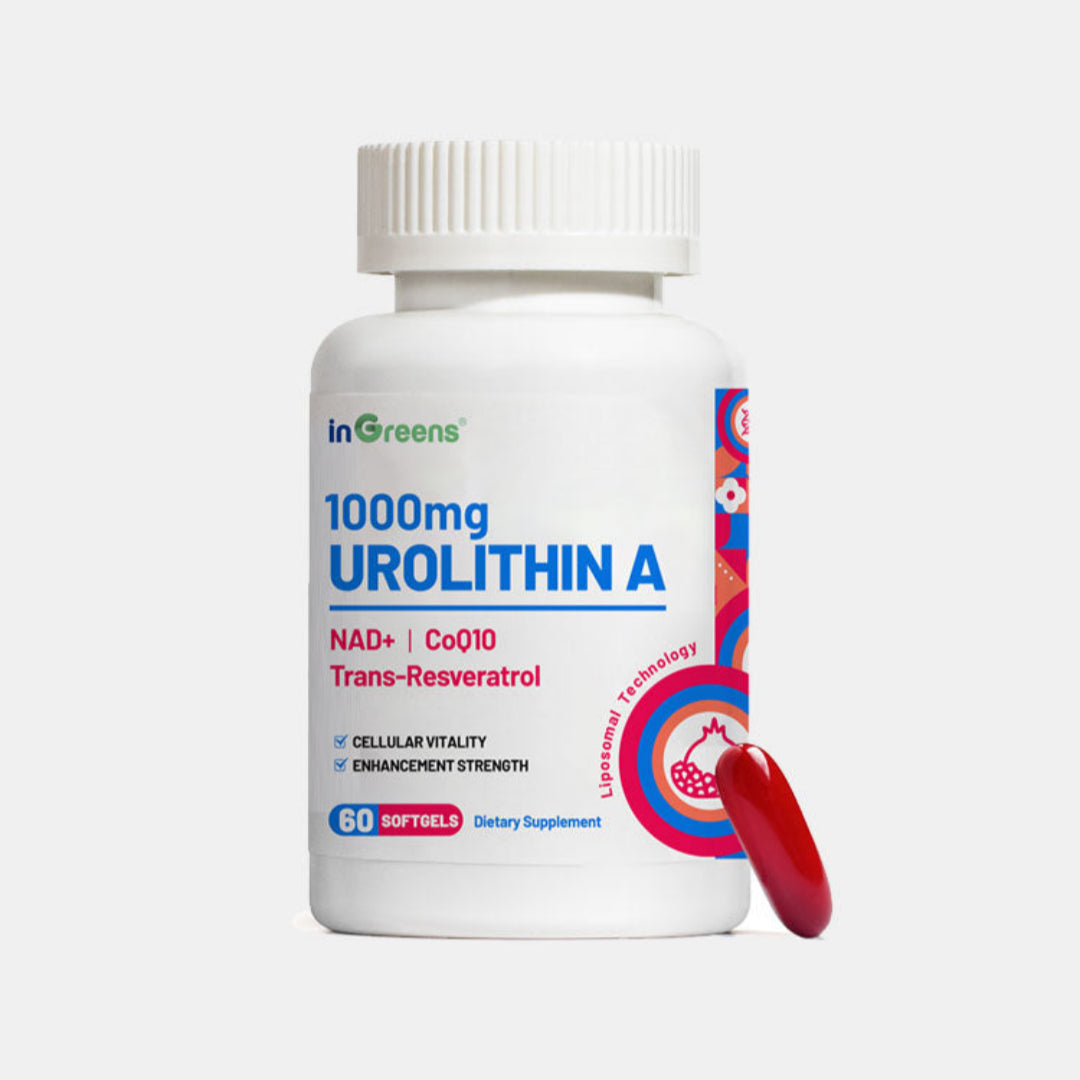
For adults interested in Urolithin A supplementation, the inGreens Urolithin A Complex combines four featured ingredients in a convenient softgel formula.
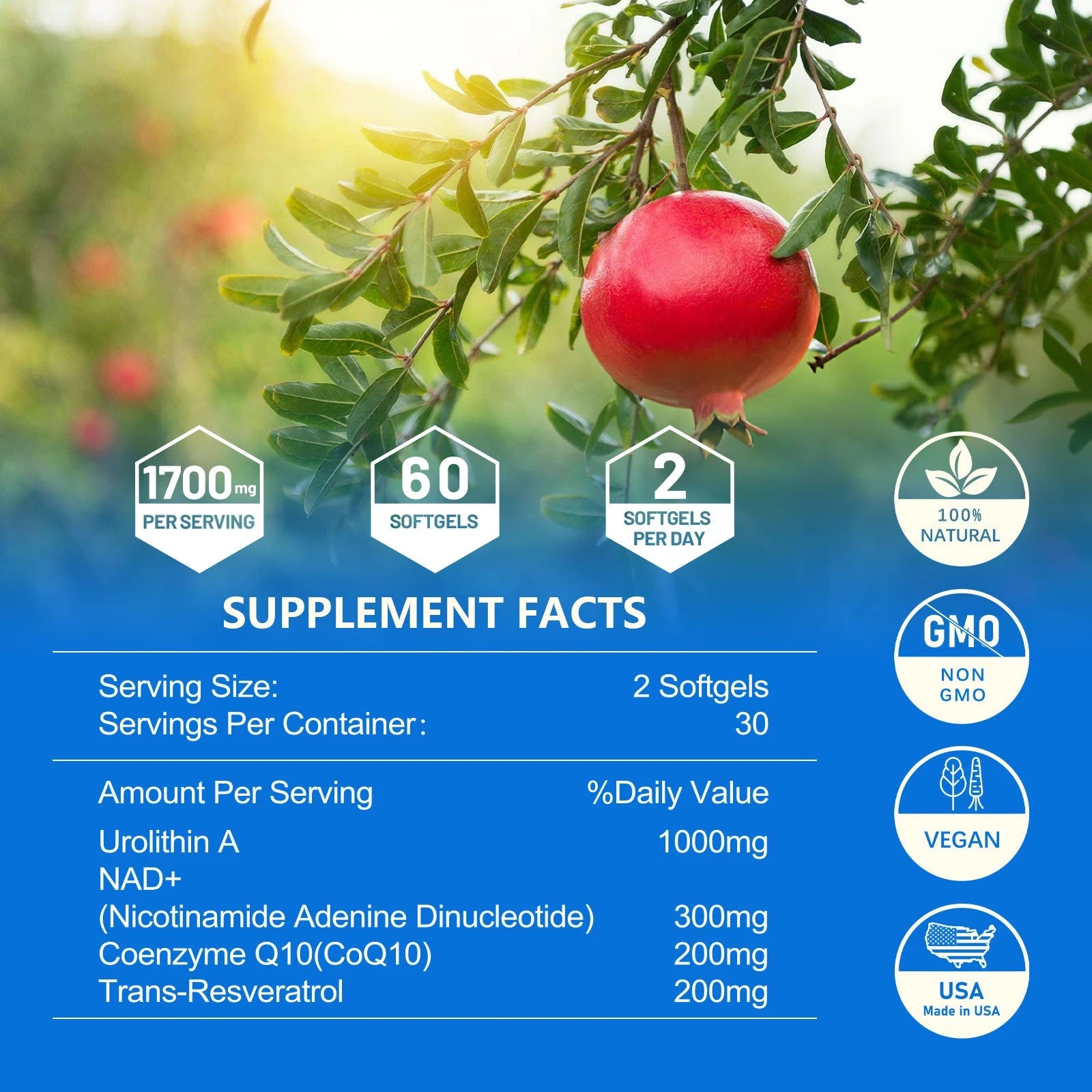
Each two-softgel serving provides:
| Ingredient | Amount Per Serving |
|---|---|
| Urolithin A | 1,000 mg |
| NAD+ | 300 mg |
| CoQ10 | 200 mg |
| Trans-Resveratrol | 200 mg |
Urolithin A is the main ingredient connected to the mitophagy research discussed in this article.
NAD+, CoQ10, and trans-resveratrol are included as additional ingredients with their own areas of cellular and nutritional research.
The bottle contains 60 softgels, providing 30 servings. According to the product label, the suggested use is two softgels daily, with or without food.
One distinction is worth mentioning: the human clinical research discussed above investigated Urolithin A as an individual ingredient. It does not establish the clinical effectiveness of the complete four-ingredient inGreens formula.
If you'd like to review the ingredient amounts and product details, you can find the full formula here:
Explore inGreens Urolithin A Complex
A Different Way to Think About Cellular Health
One thing I find particularly interesting about mitophagy research is how it changes the way we think about energy and aging.
We often focus on how efficiently our cells produce energy. But the ability to maintain the systems responsible for producing that energy matters, too.
Mitophagy gives researchers a way to study that maintenance process in much greater detail.
Urolithin A is one of the compounds being investigated in this field, and early human findings have made it an interesting subject for further research.
There's still more to learn, especially about long-term outcomes and how molecular changes translate into everyday health.
For now, understanding how cells maintain their mitochondria provides a useful perspective on why mitochondrial health has become such an important part of the broader conversation around healthy aging.