





Creatine for Women: What Does the Research Say?

For a long time, creatine was marketed almost entirely toward men who wanted bigger muscles or better gym performance. That picture is changing. More women are asking about creatine, especially those who lift weights, stay active as they get older, or simply want to understand whether this supplement has a place in their routine.
The short answer? Creatine is not a men's supplement. Women use the same basic energy system, and the science suggests creatine may support certain types of exercise performance in women, too. But the research is still developing, and some of the claims circulating online go much further than the evidence.
Here's what is worth knowing.
Creatine isn't just for building muscle
Creatine is a compound the body makes naturally and stores mainly in skeletal muscle. It helps replenish ATP, the quick energy source muscles use during short, intense efforts.
That matters during activities such as lifting weights, sprinting, jumping, or repeating hard efforts with limited rest. When muscle creatine stores are higher, the body may be better able to maintain performance across those efforts.
This mechanism is not exclusive to men. Women can increase muscle creatine stores through supplementation as well. The practical question is how much that translates into measurable improvements in real-world training.
A 2026 systematic review looking specifically at females engaged in exercise or training found a small positive overall effect across the available research. The authors also emphasized substantial differences between studies and low or very low certainty for several outcomes. In other words, the findings are encouraging, but they are not a guarantee that every woman will notice a dramatic difference.
What might women actually notice?
The strongest practical reason to consider creatine is usually strength training or exercise that involves repeated high-intensity effort.
For someone following a consistent resistance-training routine, creatine may help support training capacity. Over time, being able to complete quality training sessions can contribute to strength and lean-mass gains. It is important to keep the order of cause and effect clear: creatine does not replace resistance training. It may complement the work being done in the gym.
Some women also ask about creatine during perimenopause and after menopause. This is an area of growing interest because maintaining muscle strength becomes increasingly important with age. Early research suggests creatine may be useful when paired with resistance exercise, but it should not be presented as a treatment for menopause symptoms or as a substitute for a well-designed exercise and nutrition plan.
You may also see claims about mood, memory, or hormonal balance. These areas are being studied, but the evidence is not strong enough to treat creatine as a proven solution for any of them.
Does the menstrual cycle change how creatine works?
Hormonal fluctuations can influence several aspects of exercise physiology, including fluid regulation and how training feels at different points in the menstrual cycle. Researchers are interested in whether these changes affect creatine metabolism or the response to supplementation.
At this point, there is not enough consistent evidence to recommend a complicated cycle-based creatine schedule. There is no well-established need to start, stop, or change creatine intake according to a particular menstrual-cycle phase.
For most healthy adults who choose to use creatine, consistency is a more practical approach than trying to time every serving around hormonal changes.
How much should women take?
Many creatine studies use creatine monohydrate, with a common daily maintenance amount in the range of 3–5 grams. That is a familiar research range, not a personalized recommendation for every woman. Individual circumstances, health status, training, diet, and the product's actual creatine content all matter.
A loading phase is sometimes used in research to raise muscle creatine stores more quickly, but it is not essential. A consistent daily intake can also increase muscle stores over time.
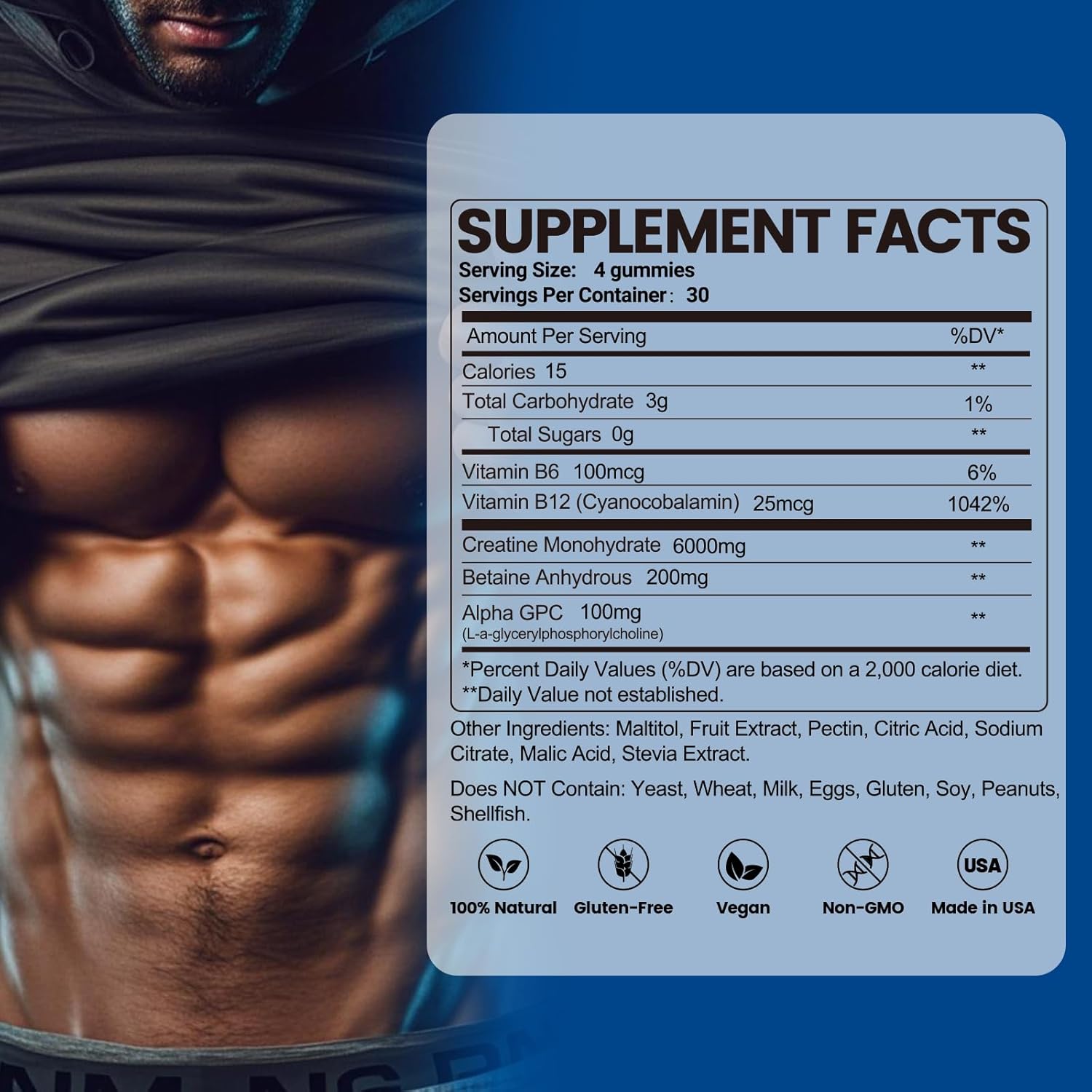
One detail worth checking: the weight of a supplement serving is not necessarily the amount of creatine monohydrate in that serving. This matters especially with gummies and blends. Read the Supplement Facts panel and look for the actual amount of creatine monohydrate, rather than assuming the total serving weight is all creatine.
What about water weight?
Creatine can increase the amount of water stored inside muscle cells. Some people notice a small increase on the scale, particularly when they first begin supplementing or use a loading protocol.
That change is not the same as gaining body fat. Still, it is understandable that scale fluctuations can feel frustrating, especially for women who track body weight closely. It may help to look at broader measures of progress, such as strength, training consistency, energy during workouts, and how clothing fits, rather than judging the supplement by daily scale changes.
Creatine is not a fat burner, and it should not be marketed as one.
Is creatine worth considering?
If you regularly strength train, play sports, or do repeated high-intensity exercise, creatine monohydrate may be worth discussing as one part of your routine. If you rarely exercise, it may offer less noticeable practical value.
Women who are pregnant, breastfeeding, have kidney disease, or take medications that may affect kidney function should speak with a qualified healthcare professional before using creatine. Research in some of these groups is limited.
My take is simple: women do not need a special version of creatine just because they are women. They need clear product information, realistic expectations, and a routine that makes sense for their goals.
If you are exploring a convenient format, take a look at inGreens Creatine Monohydrate Gummies. Check the Supplement Facts panel carefully to confirm the actual creatine monohydrate amount per serving before comparing it with research protocols.
Creatine can be a useful tool, but it is still just one small part of a much bigger picture: consistent movement, strength training, good nutrition, and recovery.