





Creatine for Beginners: How Much Should You Take?

If you're new to creatine, one of the first questions you'll probably ask is how much you actually need.
You may have seen people taking 5 grams a day, others starting with a much larger amount, and some following complicated schedules that seem designed for serious athletes.
The good news is that creatine supplementation does not have to be complicated.
For many healthy adults, a daily intake of 3–5 grams of creatine monohydrate is a commonly used maintenance approach. You do not necessarily need a loading phase, and you don't have to take it at a special time of day.
What matters most is understanding how creatine works, checking the actual amount in your product, and taking it consistently.
Here's how to approach it as a beginner.
How Much Creatine Should Beginners Take?
A common starting approach is 3–5 grams of creatine monohydrate per day.
This range is widely used in research and sports nutrition practice. The appropriate amount can depend on factors such as body size, muscle mass, diet, and individual circumstances.
For someone starting out, the most important thing is not to assume that taking more will automatically produce better results.
Creatine works by increasing the amount of creatine stored in your muscles over time. Once muscle stores become saturated, taking substantially more than your body can use does not necessarily provide additional performance benefits.
A simple daily routine is often easier to maintain than a complicated schedule.
Do You Need a Creatine Loading Phase?
You've probably come across the term "creatine loading."
A traditional loading protocol involves taking approximately 20 grams of creatine per day, usually divided into four smaller servings, for about 5–7 days. After that, intake is reduced to a maintenance amount, commonly 3–5 grams daily.
The purpose is to increase muscle creatine stores more quickly.
But loading is optional.
You can also skip the loading phase and take a smaller daily amount from the beginning. Muscle creatine stores will generally increase more gradually over several weeks.
The difference is mainly how quickly you reach higher muscle creatine levels, not whether creatine can work at all.
For most beginners, a steady daily routine is a perfectly reasonable approach. It is also simpler for people who prefer to avoid taking several servings throughout the day.
When Is the Best Time to Take Creatine?
This is another question that comes up frequently.
Should you take creatine before a workout? Immediately afterward? In the morning?
The practical answer is that daily consistency is more important than precise timing.
Creatine is not a pre-workout stimulant. It does not need to be taken immediately before exercise to provide an instant energy boost.
Some people take it after training because it fits naturally into their post-workout routine. Others take it with breakfast or another regular meal.
Choose a time that you can remember and stick with.
If taking creatine with food feels more comfortable for your stomach, that's a reasonable option too.
How Long Does Creatine Take to Work?
Creatine is not something most people notice immediately after their first serving.
Without a loading phase, muscle creatine stores generally increase gradually with consistent daily supplementation. It may take several weeks to approach saturation.
With a loading protocol, that process can happen more quickly, often within about a week.
However, reaching higher muscle creatine stores does not mean you'll automatically see a dramatic change in the mirror.
The results you notice depend on your training, nutrition, recovery, and starting creatine levels.
Some people may notice a small increase in body weight early on because creatine increases water stored within muscle. This is not the same as gaining the same amount of new muscle tissue.
Think of creatine as a support for your training routine, not a shortcut around it.
Creatine Gummies vs. Powder: Check the Actual Creatine Amount
Creatine is available in several forms, including powders, capsules, and gummies.
The format can make a difference in convenience, but it is important to compare products based on the amount of creatine they actually provide.
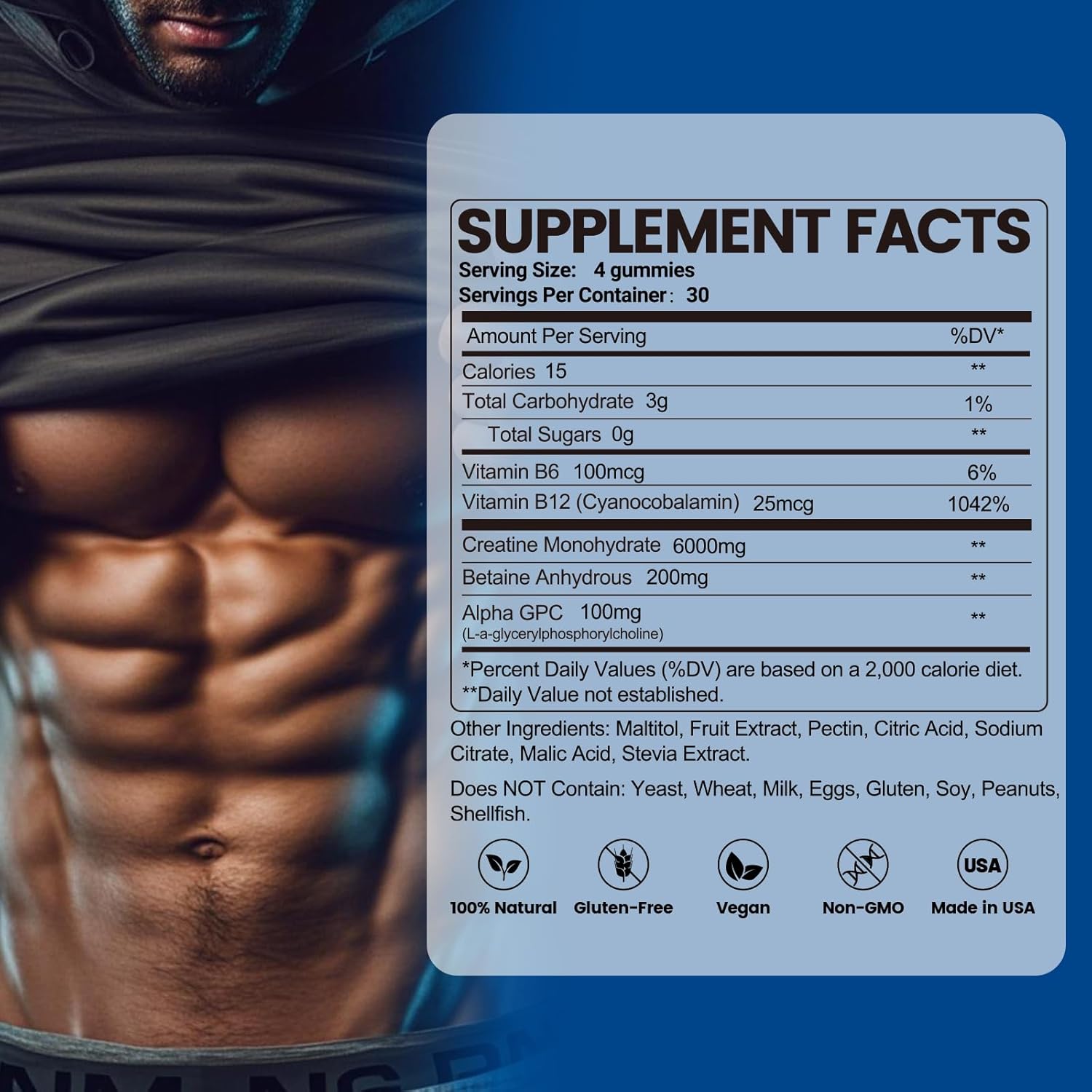
For example, a gummy supplement may contain several ingredients in one serving. The total weight of the formula is not necessarily the same as the amount of creatine monohydrate.
When reading a label, look for:
-
Serving size: How many gummies or capsules make up one serving?
-
Creatine amount: How many grams of creatine monohydrate are included?
-
Other ingredients: Does the formula include additional compounds?
-
Directions: How many servings does the manufacturer recommend?
This distinction matters when comparing a multi-ingredient gummy with a plain creatine powder.
For inGreens Creatine Monohydrate Gummies, the product is presented as a multi-ingredient formula with 6g per serving. Check the current Supplement Facts panel to confirm the exact creatine monohydrate amount before comparing it with a 3–5g daily creatine target.
You can explore the product here:
inGreens Creatine Monohydrate Gummies – Mixed Berry, 120 Count
Should You Take Creatine on Rest Days?
Yes, if you're following a daily creatine routine, you generally continue taking it on rest days.
Remember, the goal is to maintain muscle creatine stores over time. Creatine is not only useful on the days you lift weights.
Taking it consistently on non-training days helps keep the routine simple.
You don't need to take an extra serving after missing a day. Just return to your usual schedule.
Do You Need to Drink More Water?
You should stay adequately hydrated whether or not you take creatine.
Creatine increases water stored within muscle tissue, which is one reason some people notice a change in body weight after starting supplementation.
That does not mean you need to force yourself to drink excessive amounts of water.
Your fluid needs depend on your activity level, climate, body size, and how much you sweat. If you exercise in hot conditions or have a demanding training session, pay attention to your normal hydration needs.
A sensible approach is to drink regularly throughout the day and replace fluids lost through exercise.
Is It Safe to Take Creatine Every Day?
Creatine monohydrate has been studied extensively, and research supports its use for many healthy adults when taken at commonly studied amounts.
Some people experience temporary digestive discomfort, bloating, or an increase in body weight, particularly when using larger amounts or loading protocols.
People with existing kidney conditions, those who are pregnant or breastfeeding, or anyone taking medication or managing a medical condition should speak with a qualified healthcare professional before starting supplementation.
If you have a blood test coming up, it may also be worth telling your healthcare provider that you use creatine, since creatine supplementation can influence blood creatinine measurements. A creatinine result should be interpreted in the context of your overall health rather than on its own.
A Simple Creatine Routine for Beginners
If you want to keep things straightforward, remember these points:
-
Choose a product that clearly states its creatine monohydrate content.
-
Follow the serving directions and check how much actual creatine you are getting.
-
A common maintenance approach for healthy adults is 3–5 grams of creatine monohydrate daily.
-
You do not need to load if you prefer a gradual approach.
-
Take it consistently, including on rest days.
-
Combine supplementation with regular training, balanced nutrition, and adequate recovery.
You don't need a complicated routine to get started.
The Bottom Line
For beginners, creatine supplementation can be simple. A daily maintenance approach of 3–5 grams of creatine monohydrate is commonly used, while a loading phase is optional.
The most useful habit is consistency. Choose a format that fits your routine, read the Supplement Facts panel carefully, and make sure you're comparing the actual creatine amount rather than the total weight of a multi-ingredient formula.
Creatine can support strength and high-intensity exercise performance, but it works best alongside a sensible training and nutrition plan.
If you're exploring a convenient gummy option, take a closer look at the ingredients and serving information for inGreens Creatine Monohydrate Gummies.
This article is for general educational purposes only and is not a substitute for individualized medical advice.