





Creatine Before or After a Workout: Does Timing Matter?

You've probably heard different advice about when to take creatine.
Some people swear by taking it before a workout. Others say the post-workout window is better, especially when creatine is taken with a protein shake. And then there are people who take it whenever they remember.
So, which approach is actually best?
After looking at the research, the answer is less complicated than fitness advice online sometimes makes it sound: taking creatine consistently matters more than getting the timing exactly right.
There are a few interesting details worth understanding, though. If you train in the morning, exercise in the evening, or prefer taking supplements with meals, you can build a routine that makes sense without worrying about a perfect minute on the clock.
Before a Workout: Is There an Advantage?
Creatine is involved in the rapid regeneration of ATP, the energy currency your muscles use during short, intense efforts. Because of that role, it is easy to assume that taking creatine immediately before exercise will give you an instant boost.
But creatine does not work like caffeine.
It is not a stimulant that you take and immediately feel. Its better-established benefits come from gradually increasing the amount of creatine stored in your muscles through regular supplementation.
That distinction is important. Taking creatine five minutes before lifting weights does not suddenly fill your muscles with extra energy for that session.
Some researchers have explored whether taking creatine before exercise could influence how much is delivered to working muscles. Exercise increases blood flow to active tissue, which has led to theories about nutrient uptake around training. However, these mechanisms do not establish that pre-workout timing produces better long-term results.
In practical terms, taking creatine before training is fine if it fits your routine. Just don't expect it to act like a traditional pre-workout supplement.
After a Workout: Is the Post-Workout Window Better?
Post-workout supplementation is popular for a reason. Many people already have a routine that includes a protein shake, a meal, or a recovery snack after training. Adding creatine to that routine can make daily supplementation easier.
There has also been research comparing creatine taken before exercise with creatine taken afterward.
One frequently discussed study followed resistance-trained men and women for eight weeks. Participants received 5 grams of creatine either within an hour before training or within an hour afterward, alongside protein and carbohydrate. The researchers did not find a meaningful additional advantage from either timing strategy for the measured training adaptations. The study was relatively small, so it cannot settle every question, but it does not support the idea that everyone needs to take creatine immediately after exercise.
Other small studies have produced mixed findings. Overall, the evidence has not established a reliable post-workout advantage over pre-workout use.
If you already take a shake after training, taking creatine with it is a convenient option. It is not a requirement for getting results.
What Does the Research Actually Say?
This is one of those topics where it helps to separate interesting theories from what human studies have demonstrated.
A 2024 scientific review examining common questions about creatine supplementation concluded that the available evidence does not show that precise timing around resistance training is a critical factor in long-term adaptations. Studies comparing pre- and post-workout intake have generally found similar results, although the research base is still limited by small sample sizes and differences in study design.
A randomized study published in 2022 looked at 34 collegiate athletes who took creatine before or after resistance training for eight weeks. The researchers found no meaningful timing-related difference in the measured outcomes.
There is also a newer, small pilot study from 2026 that examined a single creatine dose before, during, or after a strength session. It reported an acute strength-performance advantage in the pre-exercise condition. That's an interesting finding, but it involved only 11 physically active men and examined performance during a single session. It does not demonstrate that taking creatine before every workout leads to better muscle growth or greater long-term strength gains.
Taken together, the research supports a practical conclusion: there may be details worth studying further, but current evidence does not justify treating the pre- or post-workout window as essential.
Does It Matter If You Take Creatine With Food?
For most people, taking creatine with a meal is simply a convenient way to remember it.
Some research has explored whether consuming creatine alongside carbohydrates or carbohydrates and protein can influence creatine retention. Insulin responses may play a role in creatine transport into muscle. However, this does not mean you must combine every serving with a large meal or a protein shake.
If taking creatine with breakfast works for you, that's fine. If you prefer taking it after your evening workout, that's fine too.
The best routine is one you can follow consistently without making supplementation feel like another complicated part of your day.
What If You Work Out in the Morning?
Morning training can make supplement timing feel a little more confusing.
Should you take creatine before breakfast? Wait until after exercise? Take it with your first meal?
There is no strong evidence that you need to train fasted or take creatine on an empty stomach to get its established benefits.
If you tolerate it comfortably, you can take it before your workout. If you prefer eating first, take it with breakfast afterward. Either approach can fit a consistent daily routine.
For people who train early and rush out the door, convenience may matter more than theoretical timing advantages.
What About Evening Workouts?
The same principle applies if you train after work.
You can take creatine before your session, with dinner, or after training. There is no established requirement to take it immediately after your final set.
If you find that taking supplements late in the evening is inconvenient, simply choose another regular time. Creatine is not a stimulant, and its main role is not to create an immediate feeling of energy.
Should You Take Creatine on Rest Days?
Yes. If you're following a daily supplementation routine, you generally continue taking creatine on days when you don't exercise.
This is because creatine supplementation is intended to maintain elevated muscle creatine stores over time, rather than provide a one-time effect for each workout.
Skipping every rest day can make your routine unnecessarily inconsistent. A simple daily habit is easier to remember: take your usual serving on training days and non-training days alike, following the product directions.
You also don't need to double the next day's amount if you forget a serving. Just return to your normal routine.
A Practical Routine That Doesn't Overcomplicate Things
If you're trying to decide when to take creatine, start with your existing schedule.
-
Morning workouts: Take it with breakfast or at another convenient time.
-
Afternoon workouts: Take it before or after training, whichever is easier to remember.
-
Evening workouts: Take it with dinner or after exercise if that fits your routine.
-
Rest days: Keep your usual daily schedule.
For healthy adults, commonly studied maintenance protocols use approximately 3–5 grams of creatine monohydrate per day. The actual amount appropriate for an individual can vary, and anyone with a medical condition or taking medication should consult a healthcare professional before starting supplementation.
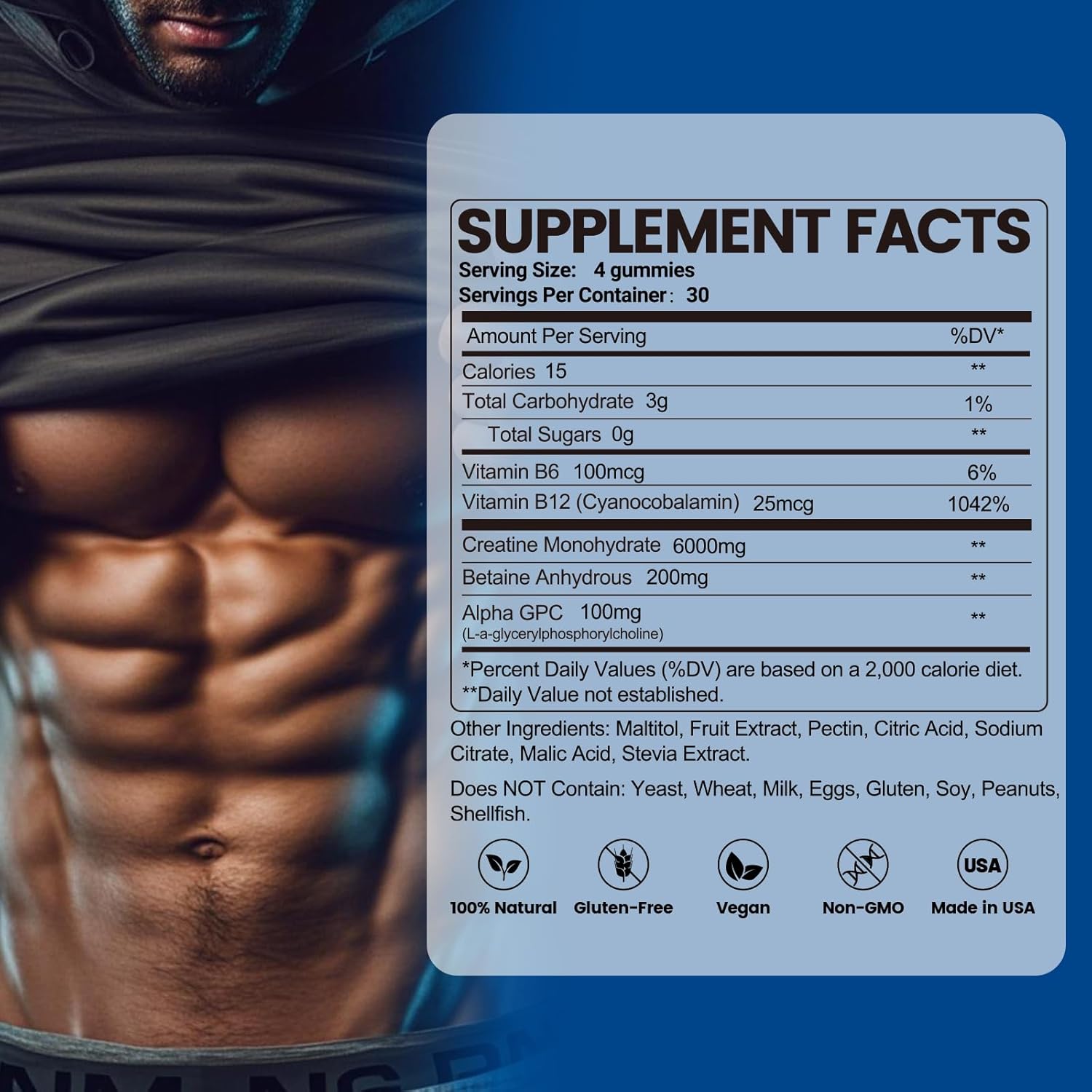
One more detail: if you're using a multi-ingredient creatine gummy, check the Supplement Facts panel rather than assuming the total serving weight is the amount of creatine monohydrate. The ingredient amount is what matters when comparing products with research protocols.
The Bottom Line
Creatine timing is not something most beginners need to stress over.
Taking it before a workout is fine. Taking it afterward is fine. Taking it with breakfast or dinner is also a reasonable option. Current evidence does not establish that one of these approaches consistently produces better long-term strength or muscle-building results.
Instead of trying to find a perfect 30-minute window, focus on choosing a clearly labeled product, following its serving directions, and building a daily habit that works with your training schedule.
If a convenient gummy format fits your routine, you can explore inGreens Creatine Monohydrate Gummies – Mixed Berry, 120 Count. As with any multi-ingredient formula, check the current Supplement Facts panel for the actual amount of creatine monohydrate per serving.
This article is for general educational purposes only and is not a substitute for individualized medical advice.