





What Does Creatine Actually Do? A Science-Based Guide

If you have spent any time around fitness, you have probably heard someone mention creatine. It is one of the most researched supplements in sports nutrition, yet it is still surrounded by a surprising number of questions.
Does it build muscle directly? Does it give you more energy? Is it only useful for bodybuilders? And why do so many people take it every day instead of only before a workout?
The simplest way to understand creatine is this: it helps your muscles regenerate energy quickly when you need to produce short, intense bursts of effort. That may sound like a small role, but it can make a meaningful difference when you repeat demanding movements during training.
Let's look at what actually happens inside the body.
First, What Is Creatine?
Creatine is a naturally occurring compound made from amino acids. Your body produces some of it, mainly in the liver and kidneys, and you also get it from foods such as red meat and seafood.
Most of the creatine in your body is stored in skeletal muscle. Some is present in other tissues, including the brain.
Inside muscle cells, creatine exists in two main forms: free creatine and phosphocreatine. Phosphocreatine is particularly important because it helps your body rapidly restore ATP, the molecule cells use as their immediate energy source.
That is the foundation of creatine's role in exercise.
How Creatine Helps Your Muscles Produce Energy
Every time your muscles contract, they use ATP (adenosine triphosphate) for energy. ATP loses one of its phosphate groups during this process and becomes ADP (adenosine diphosphate).
The problem is that muscles only keep a relatively small amount of immediately available ATP. During intense activity, they need to replenish it quickly.
This is where phosphocreatine comes in.
Phosphocreatine can donate a phosphate group to ADP, helping turn it back into ATP. In simple terms, the creatine system acts like a rapid energy reserve that helps keep muscle contractions going during demanding efforts.
Think about a heavy set of squats, a short sprint, or several repeated bursts of activity on the basketball court. These efforts require energy quickly. Having more creatine stored in muscle can help support the rapid regeneration of ATP during that kind of work.
Creatine is not a stimulant, and it does not create energy out of nothing. It supports one of the body's existing energy systems.
What Does That Mean for Strength and Exercise Performance?
The best-supported benefits of creatine are related to high-intensity, intermittent exercise.
Research has found that creatine supplementation can help improve performance in activities involving repeated short bursts of effort, such as:
-
Weightlifting and resistance training
-
Short sprints
-
Repeated jumps
-
High-intensity interval training
-
Sports involving repeated accelerations, such as basketball and soccer
The benefit is not necessarily that you suddenly become stronger overnight. Rather, creatine may help you maintain performance across repeated efforts or complete a little more total training work.
Over time, that extra training capacity can matter.
For example, imagine two people following the same resistance-training program. If one person is able to complete an additional repetition or maintain better output across several sets, that small difference may contribute to better training adaptations over weeks and months.
This is one reason creatine is associated with improvements in strength and lean body mass during resistance training.
It is important to keep the relationship clear: creatine supports the conditions for better training; it does not replace the training itself. Consistent exercise, sufficient protein, adequate calories, and recovery still matter.
Does Creatine Directly Build Muscle?
Not in the same way that training stimulates muscle growth.
Resistance exercise provides the stimulus for muscle adaptation. Creatine helps support the energy demands of that exercise, which may allow someone to perform more quality work over time.
There is also an early change that can confuse people: creatine supplementation often increases water stored within muscle cells. This can contribute to a rise in body weight, especially during the first weeks of use.
That increase is not automatically the same as new muscle tissue.
Over a longer period, when creatine is combined with resistance training, research supports improvements in strength and lean body mass. But it is worth distinguishing short-term water-related weight changes from actual training-related muscle development.
If your goal is to build muscle, creatine can be one useful part of a broader routine. It is not a substitute for progressive resistance training or a balanced diet.
Is Creatine Useful for Endurance Exercise?
This is where expectations matter.
Creatine is particularly useful for short, high-intensity efforts that rely heavily on the phosphocreatine energy system. It is not generally considered a major performance aid for steady-state endurance activities such as long-distance running or cycling.
That does not mean endurance athletes can never benefit from it. Many sports combine endurance with repeated sprints, changes of pace, or explosive movements. In those situations, creatine may have a more relevant role.
But if your main activity is continuous, moderate-intensity exercise, creatine may not make a noticeable difference to your performance.
The type of exercise you do matters more than the popularity of the supplement.
Why Do People Take Creatine Every Day?
Creatine works by gradually increasing the amount stored in muscle. It is not designed to provide an immediate sensation of energy like caffeine.
That is why regular intake is commonly used in research and practice. Taking creatine consistently helps build and maintain muscle creatine stores over time.
Creatine monohydrate is the most extensively studied form. Research commonly uses a daily maintenance intake of around 3–5 grams for healthy adults. Some protocols include an initial loading phase, while others use a smaller daily amount and allow muscle stores to rise gradually.
The right approach depends on the individual, the product, and personal circumstances. We will look more closely at dosage and beginner-friendly use in the next article in this series.
What About Brain Health and Other Benefits?
Creatine is also present in the brain, where energy availability matters. Researchers have explored whether supplementation may influence cognitive performance, particularly under conditions such as sleep deprivation, aging, or low dietary creatine intake.
There is growing scientific interest in this area, but the evidence is not as established as it is for high-intensity exercise performance. Results vary across studies, and creatine should not be presented as a proven memory or brain-health treatment.
For now, its clearest and most consistent application remains supporting repeated high-intensity exercise and training adaptations.
Is Creatine Right for Everyone Who Exercises?
Not necessarily.
If your routine includes resistance training, sprinting, or repeated high-intensity efforts, creatine may be worth learning about. If you mainly do low-intensity endurance exercise, the potential performance benefit may be less relevant.
Individual responses also vary. Diet, existing muscle creatine levels, training habits, and consistency can all influence the results someone experiences.
People with medical conditions, those who are pregnant or breastfeeding, and anyone taking medication or managing a health concern should discuss supplementation with a qualified healthcare professional before starting.
A supplement should fit your needs, not the other way around.
The Takeaway
Creatine is not magic, and it is not just for bodybuilders. It is a naturally occurring compound that helps your muscles regenerate ATP quickly during short, intense efforts.
That role explains why creatine monohydrate has become one of the most studied supplements for strength training and high-intensity exercise. By supporting repeated efforts and training capacity, it may contribute to better strength and lean-mass adaptations over time.
The key is to keep expectations realistic: creatine works best as part of a consistent routine that already includes appropriate exercise, nutrition, and recovery.
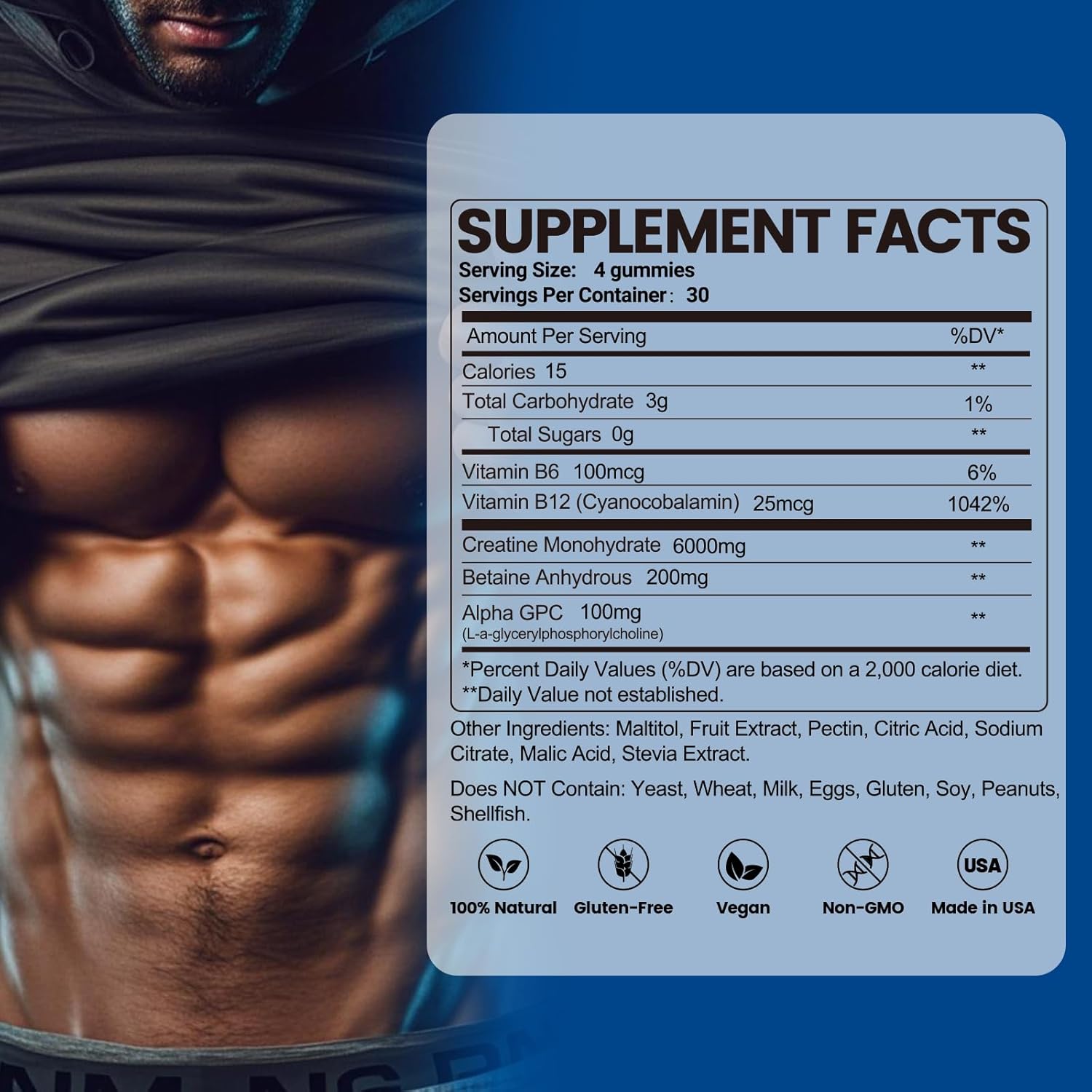
If you are considering adding creatine to your routine, start by understanding the form, serving size, and amount of creatine in the product you choose.
Explore inGreens Creatine Monohydrate Gummies
For those who prefer a convenient gummy format, take a look at inGreens Creatine Monohydrate Gummies – 6g, Mixed Berry, 120 Count.
This article is for general educational purposes only and is not a substitute for individualized medical advice.