





NAD+, CoQ10 & Resveratrol: Understanding the Ingredients

When exploring supplements focused on cellular wellness, three ingredients often appear together: NAD+, Coenzyme Q10 (CoQ10), and resveratrol.
Each has attracted scientific interest for a different reason. NAD+ is involved in essential cellular reactions, CoQ10 plays a role in mitochondrial energy production, and resveratrol is a plant-derived polyphenol studied for its antioxidant properties.
But what does each ingredient actually do? Why are they sometimes included in the same supplement formula? And what should you know about the current research?
Let's take a closer look at the science behind these three ingredients and how to evaluate them as part of a daily wellness routine.
1. NAD+: A Key Coenzyme in Cellular Metabolism
Nicotinamide adenine dinucleotide, commonly known as NAD+, is a coenzyme found in virtually all living cells. It participates in hundreds of metabolic reactions and plays an essential role in how cells process nutrients and transfer energy.
One of its best-known functions is its involvement in oxidation-reduction reactions. During these reactions, NAD+ can accept electrons and become NADH. NADH can then participate in cellular processes that help generate ATP, the primary energy currency used by cells.
NAD+ is also involved in other important cellular processes, including DNA repair and the activity of enzymes that regulate cellular signaling.
Why Is NAD+ Receiving So Much Attention?
NAD+ metabolism is an active area of aging research. Scientists are investigating how NAD+ levels change over time and whether supporting NAD+ metabolism may influence aspects of normal cellular function.
It is important to distinguish between the biological role of NAD+ and the evidence for supplementation. Human studies of NAD-related supplements have often focused on precursors such as nicotinamide riboside (NR) and nicotinamide mononucleotide (NMN), rather than directly supplementing NAD+ itself.
Research has shown that some NAD+ precursors can increase NAD-related biomarkers in humans. However, whether these changes consistently translate into meaningful improvements in physical performance, metabolism, or healthy aging remains an open question.
What to remember: NAD+ is essential to normal cellular metabolism, but increasing NAD-related biomarkers does not automatically prove a specific wellness benefit.
2. CoQ10: A Compound Involved in Mitochondrial Energy Production
Coenzyme Q10, or CoQ10, is a naturally occurring compound found throughout the body. It is particularly important in mitochondria, where it participates in the electron transport chain.
Mitochondria use this process as part of ATP production. CoQ10 helps transfer electrons between components of the electron transport chain, supporting the process through which cells generate usable energy.
CoQ10 also functions as an antioxidant in the body.
What Does the Research Say About CoQ10?
Researchers have studied CoQ10 supplementation across a range of health areas. However, results vary depending on the condition being investigated, the study design, and the population involved.
For example, the National Center for Complementary and Integrative Health (NCCIH) notes that research on CoQ10 and several cardiovascular outcomes remains inconclusive. Some potential applications have shown promise, but the evidence does not support treating CoQ10 as a solution for every health concern.
CoQ10 is also available in different forms, including ubiquinone and ubiquinol. When comparing supplements, check which form is listed and how much is provided per serving.
What to remember: CoQ10 has a well-established biological role in mitochondrial energy production, while the benefits of taking additional CoQ10 depend on the specific outcome being studied.
3. Resveratrol: A Plant-Derived Polyphenol
Resveratrol is a naturally occurring polyphenol found in certain plants. It is present in foods such as grapes, berries, and peanuts, with grapes being one of its best-known dietary sources.
In laboratory research, resveratrol has attracted interest because of its antioxidant activity and its interactions with several cellular signaling pathways.
These findings have led researchers to investigate its potential relevance to metabolic health, cardiovascular function, and other areas of human health.
What Makes Trans-Resveratrol Different?
Resveratrol exists in different structural forms, including trans-resveratrol and cis-resveratrol.
Trans-resveratrol is the form most commonly discussed in supplement research and commercial formulations. When evaluating a product, look for the specific form listed on the label rather than relying on the general term "resveratrol."
What Does Human Research Show?
Resveratrol has been studied in numerous human clinical trials, but the results are not conclusive across health conditions.
A 2024 systematic review of resveratrol clinical trials highlighted the need for larger, higher-quality studies and more consistent research endpoints before firm conclusions can be made about its clinical benefits.
What to remember: Resveratrol is an interesting plant-derived compound, but laboratory findings and early research should not be interpreted as proof of specific health outcomes in people.
4. How Do NAD+, CoQ10, and Resveratrol Relate to Each Other?
These ingredients are often grouped together in cellular wellness formulas because they are involved in different areas of cellular biology.
Their roles can be understood at a high level:
| Ingredient | Primary Research Area | Biological Role |
|---|---|---|
| NAD+ | Cellular metabolism | Coenzyme involved in oxidation-reduction reactions |
| CoQ10 | Mitochondrial function | Electron transfer in the mitochondrial energy pathway |
| Resveratrol | Plant polyphenols and cellular signaling | Polyphenol studied for antioxidant activity and cellular signaling |
Although their research areas overlap in some broader discussions of cellular health, they are not interchangeable.
NAD+ participates in essential metabolic reactions. CoQ10 has a direct role in mitochondrial electron transport. Resveratrol is studied for its interactions with antioxidant and cellular signaling pathways.
This is why a formula may include all three: each ingredient contributes a different part of the formulation.
However, it is important not to assume that combining ingredients automatically creates a synergistic effect. The presence of several researched ingredients does not establish that the finished formula produces greater benefits than each ingredient individually. That requires direct testing of the combination.
5. What to Look for in a Supplement Formula
Understanding the ingredients is only one part of choosing a supplement. The product itself should also provide clear and useful information.
Before purchasing a formula featuring NAD+, CoQ10, or resveratrol, consider these points:
1. Clearly disclosed ingredient amounts
Look for the amount of each ingredient per serving. A product should make it easy to understand how much NAD+, CoQ10, or resveratrol you are actually getting.
2. Specific ingredient names
Check whether the label identifies the ingredient form. For example, trans-resveratrol is more specific than simply listing a broad resveratrol blend.
3. Serving size and directions
Compare the recommended daily serving rather than only the total amount displayed on the front of the bottle.
4. Quality and testing information
Look for transparent manufacturing and testing information. If a brand states that a product is third-party tested, consider asking what the testing covers and whether supporting documentation is available.
5. Realistic claims
Be cautious of products that promise dramatic anti-aging results or claim to reverse the effects of aging. Ingredient research does not establish that a supplement can prevent or treat age-related conditions.
6. A Four-Ingredient Approach: inGreens Urolithin A Complex
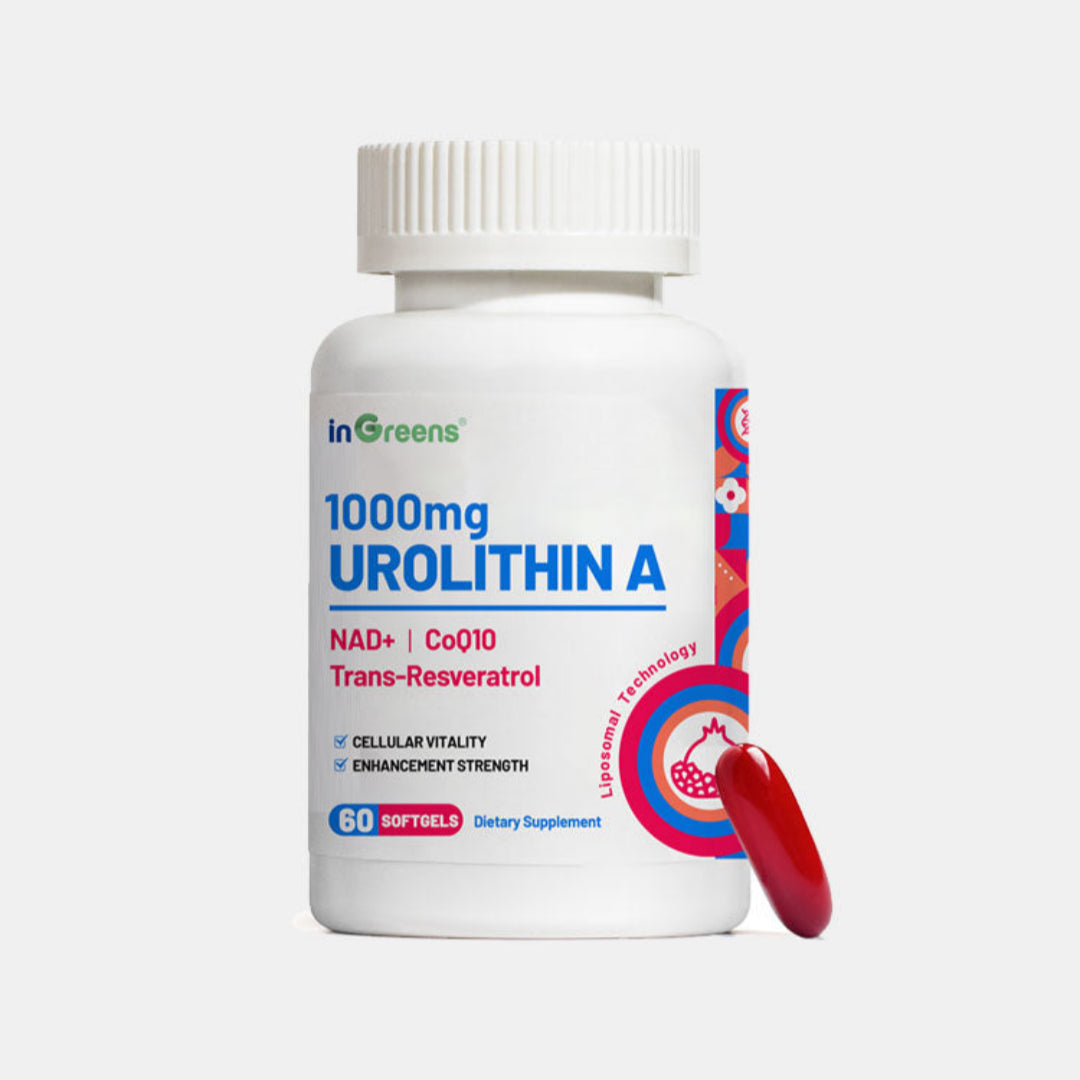
For those interested in a formula that combines several ingredients discussed in cellular wellness research, the inGreens Urolithin A Complex brings together four featured ingredients in one convenient softgel formula.
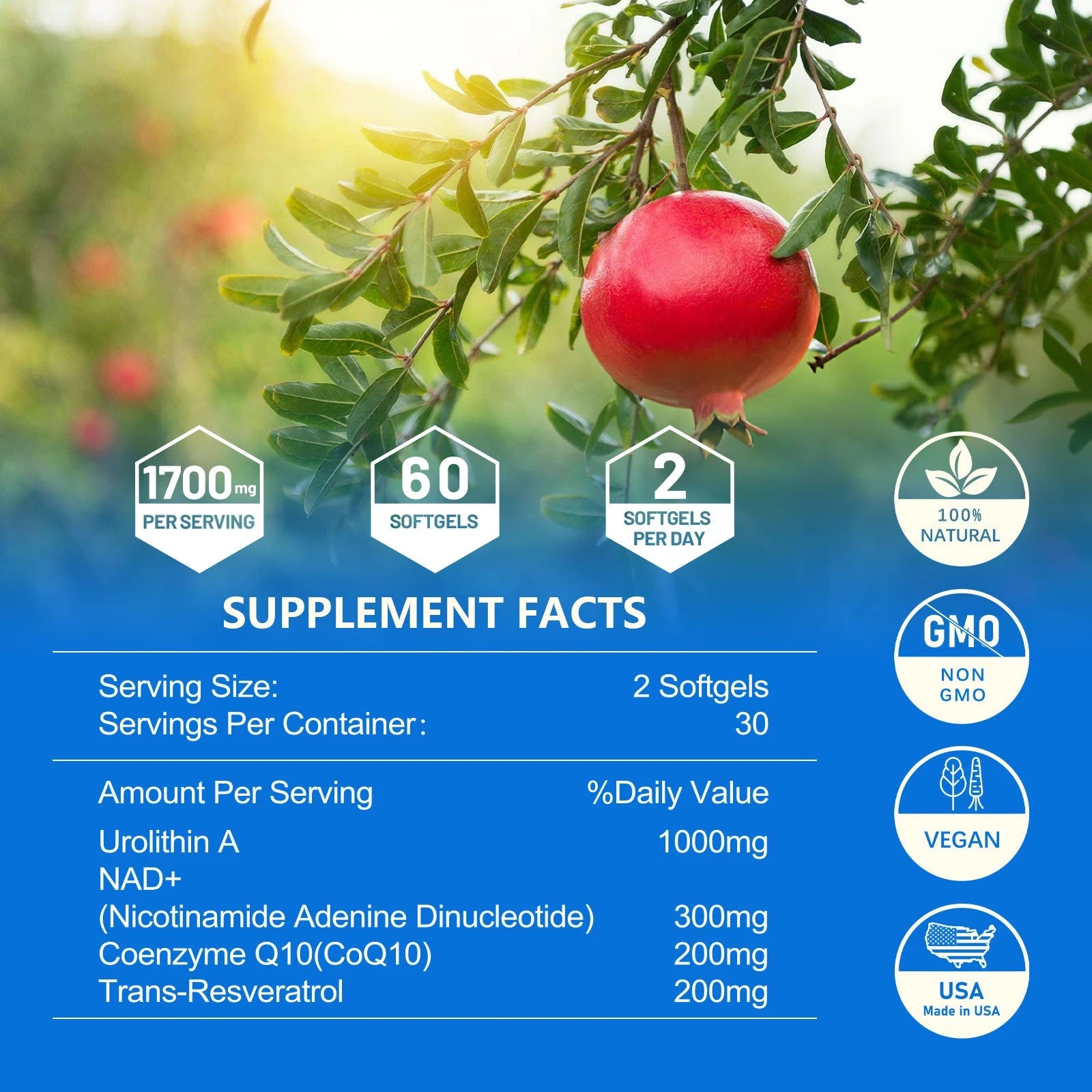
Each two-softgel serving provides:
| Ingredient | Amount Per Serving |
|---|---|
| Urolithin A | 1,000 mg |
| NAD+ | 300 mg |
| CoQ10 | 200 mg |
| Trans-Resveratrol | 200 mg |
The formula combines Urolithin A with three additional ingredients that have attracted interest in different areas of cellular research.
-
Urolithin A: Studied for its relationship with mitochondrial function and mitophagy.
-
NAD+: Involved in cellular metabolism and essential biochemical reactions.
-
CoQ10: Participates in mitochondrial electron transport.
-
Trans-Resveratrol: A plant-derived polyphenol investigated for antioxidant activity and cellular signaling.
The product comes in a softgel format, with 60 softgels per bottle and 30 daily servings.
Suggested use: Take two softgels daily, with or without food, or as directed by your healthcare professional.
The research discussed in this article relates to individual ingredients and their respective research areas. It should not be interpreted as clinical proof that this exact four-ingredient formula produces specific health outcomes or a synergistic effect.
If you would like to review the complete ingredient amounts and product details, explore the inGreens Urolithin A Complex.
You can also explore other inGreens formulas featuring these ingredients:
Frequently Asked Questions
Is NAD+ the same as NMN or NR?
No. NAD+, NMN, and NR are distinct molecules involved in the same broader metabolic pathway. NMN and NR are studied as NAD+ precursors, meaning they can be used by the body in pathways that produce NAD+.
What is the main difference between NAD+ and CoQ10?
NAD+ is a coenzyme involved in many cellular reactions, including oxidation-reduction processes. CoQ10 participates in electron transfer within the mitochondrial electron transport chain. Both are involved in cellular energy metabolism, but they have different functions.
Is trans-resveratrol better than regular resveratrol?
Trans-resveratrol is a specific structural form of resveratrol and is commonly used in supplements. When comparing products, check the exact form and amount listed on the label.
Can NAD+, CoQ10, and resveratrol be taken together?
These ingredients are often combined in supplement formulas. However, individual needs, medications, and health conditions can affect whether a combination is appropriate. Consult a qualified healthcare professional before starting a new supplement, especially if you take medication or are managing a health condition.
Does combining these ingredients guarantee better results?
No. Combining ingredients does not automatically establish that they work better together. The effectiveness of a finished formula needs to be evaluated through studies that test the actual combination.
Understanding the Ingredients Is the First Step
NAD+, CoQ10, and resveratrol each have distinct roles in cellular biology and different levels of scientific evidence behind them.
NAD+ is central to cellular metabolism, CoQ10 participates in mitochondrial energy production, and resveratrol remains an active subject of polyphenol research.
When choosing a supplement, look beyond the ingredient names. Review the amounts, understand the formulation, and pay attention to what the research can—and cannot—tell you.
Explore the inGreens Urolithin A Complex to review its four featured ingredients and see whether the formula fits your daily wellness routine.
References
-
Emerging strategies, applications and challenges of targeting NAD+ in the clinic. Nature Aging, 2025. https://doi.org/10.1038/s43587-025-00947-6
-
Dietary Supplementation With NAD+-Boosting Compounds in Humans: Current Knowledge and Future Directions. PubMed, 2023. https://pubmed.ncbi.nlm.nih.gov/37068054/
-
National Center for Complementary and Integrative Health (NCCIH). Coenzyme Q10. https://www.nccih.nih.gov/health/coenzyme-q10
-
Resveratrol for the Management of Human Health: How Far Have We Come? A Systematic Review of Resveratrol Clinical Trials to Highlight Gaps and Opportunities. International Journal of Molecular Sciences, 2024. https://doi.org/10.3390/ijms25020747
Disclaimer: This article is for educational purposes only and is not intended to provide medical advice. These statements have not been evaluated by the Food and Drug Administration. This product is not intended to diagnose, treat, cure, or prevent any disease.