





Urolithin A and Mitochondrial Health: What Does the Science Tell Us?

Mitochondria are often described as the powerhouses of cells, but their role goes beyond energy production. These structures are involved in several essential cellular processes, and maintaining their function requires a continuous system of repair and renewal.
One process researchers are particularly interested in is mitophagy, the removal and recycling of damaged or dysfunctional mitochondria. Urolithin A has attracted attention in this area because of its potential role in supporting this cellular maintenance process.
But what exactly is Urolithin A? How is it produced, and what have human studies actually found? Understanding the research can help put this increasingly popular ingredient into perspective.
What Is Urolithin A?
Urolithin A is a naturally occurring metabolite produced when certain gut bacteria break down ellagitannins and ellagic acid, plant compounds found in foods such as pomegranates, walnuts, and some berries.
Not everyone produces Urolithin A in the same way. Its formation depends partly on the composition of an individual's gut microbiome, meaning that eating the same foods does not necessarily result in the same amount of Urolithin A production.
This variability is one reason researchers have become interested in direct supplementation. Rather than relying on gut bacteria to convert dietary compounds, supplements provide Urolithin A itself.
Why Researchers Are Studying Urolithin A and Mitophagy
Mitochondria naturally experience wear and damage as cells carry out their everyday functions. When these structures become dysfunctional, cells need a way to identify and remove them.
This is where mitophagy comes in.
Mitophagy is a specialized form of autophagy, the cellular process responsible for breaking down and recycling unwanted components. It helps remove damaged mitochondria so that their components can be recycled.
Research has identified Urolithin A as a compound that may influence pathways associated with mitophagy. Laboratory and preclinical studies have provided a biological basis for investigating its potential role in mitochondrial maintenance.
Human research takes the next step by examining whether these mechanisms are accompanied by measurable changes in muscle performance and selected biomarkers.
The distinction is important: evidence of a biological mechanism does not automatically translate into a proven health benefit in everyday use.
What Have Human Clinical Studies Found?
Several randomized controlled trials have investigated Urolithin A supplementation in adults, with particular attention to muscle function, physical performance, and biomarkers associated with mitochondrial health.
Two studies published in 2022 provide useful examples.
1. A Four-Month Study in Middle-Aged Adults
Published in Cell Reports Medicine, this randomized, placebo-controlled trial involved 88 middle-aged adults.
Participants received either a placebo or 500 mg or 1,000 mg of Urolithin A daily for four months.
Researchers reported improvements in selected muscle-strength measurements, particularly in the hamstring muscles. Some measures related to aerobic endurance and walking performance also showed favorable changes, although not every outcome demonstrated a statistically significant difference compared with placebo.
The study also examined blood markers associated with mitochondrial metabolism and inflammation.
These findings suggest that Urolithin A warrants further investigation in relation to muscle function and cellular health.
Read the original research: Urolithin A Improves Muscle Strength, Exercise Performance, and Biomarkers of Mitochondrial Health.
2. A Study in Older Adults
A second randomized clinical trial, published in JAMA Network Open, examined 66 adults between the ages of 65 and 90.
Participants received either 1,000 mg of Urolithin A daily or a placebo over four months.
Researchers observed improvements in selected hand and leg muscle-endurance measurements after two months. Several blood biomarkers associated with mitochondrial health also changed over the study period.
However, the primary outcomes, including six-minute walking distance and maximal ATP production in hand muscle, did not show statistically significant differences between the supplementation and placebo groups.
This distinction helps explain why clinical research should be evaluated by looking at individual study outcomes rather than treating every positive finding as proof of a broader benefit.
Read the original research: Effect of Urolithin A Supplementation on Muscle Endurance and Mitochondrial Health in Older Adults.
What Do These Findings Mean?
Together, these studies provide early human evidence supporting continued research into Urolithin A and its relationship with muscle function and mitochondrial health.
There are still important limitations. The trials involved relatively small groups of participants, lasted four months, and examined specific doses and populations.
The results also do not establish that every Urolithin A supplement will produce the same outcomes. Differences in formulation, ingredient quality, and study conditions matter when interpreting clinical evidence.
A Closer Look at inGreens Urolithin A Complex
For those exploring Urolithin A supplementation, understanding the complete formula is just as important as understanding the individual ingredient.
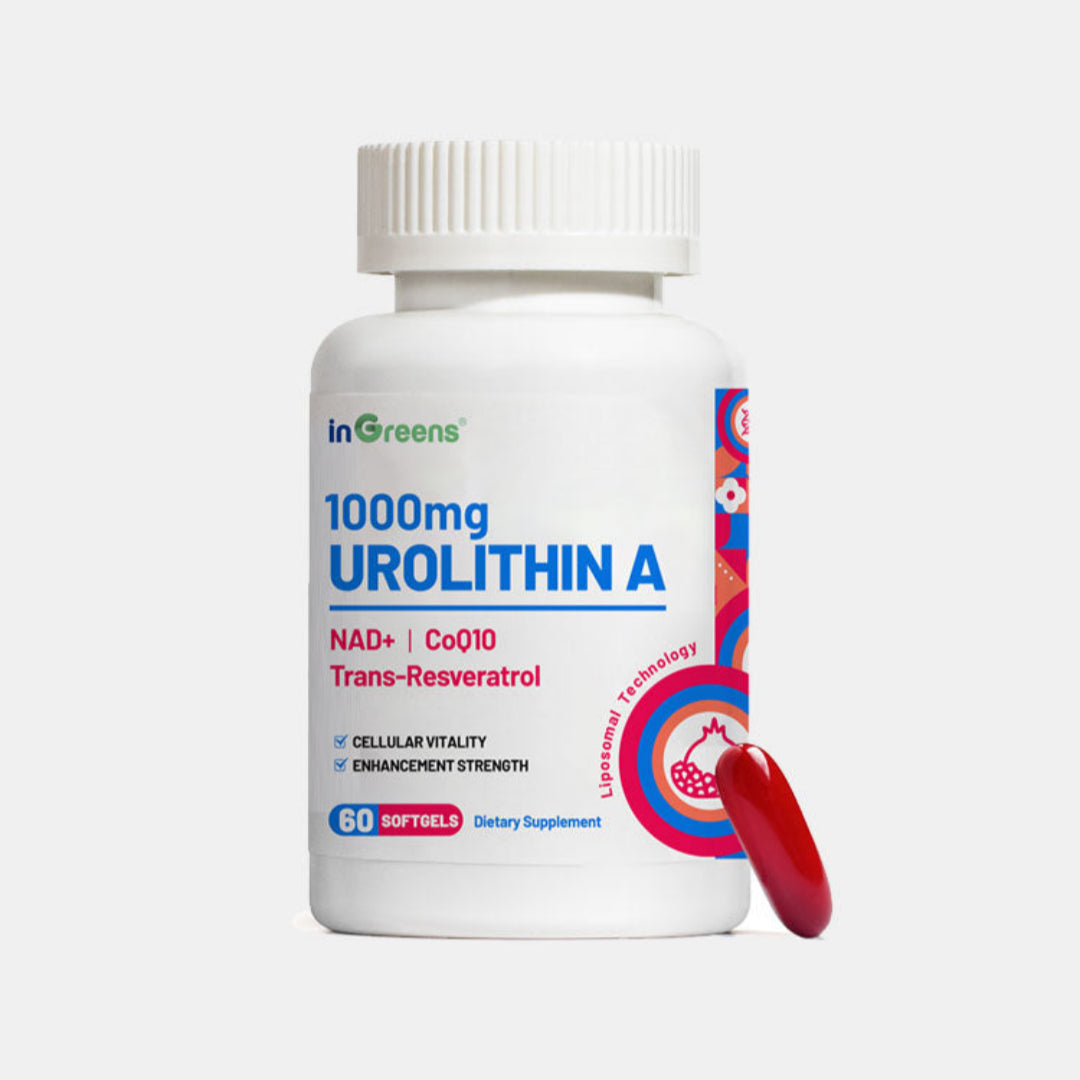
Explore inGreens Urolithin A Complex, a four-ingredient formula designed to fit into a convenient daily supplement routine.
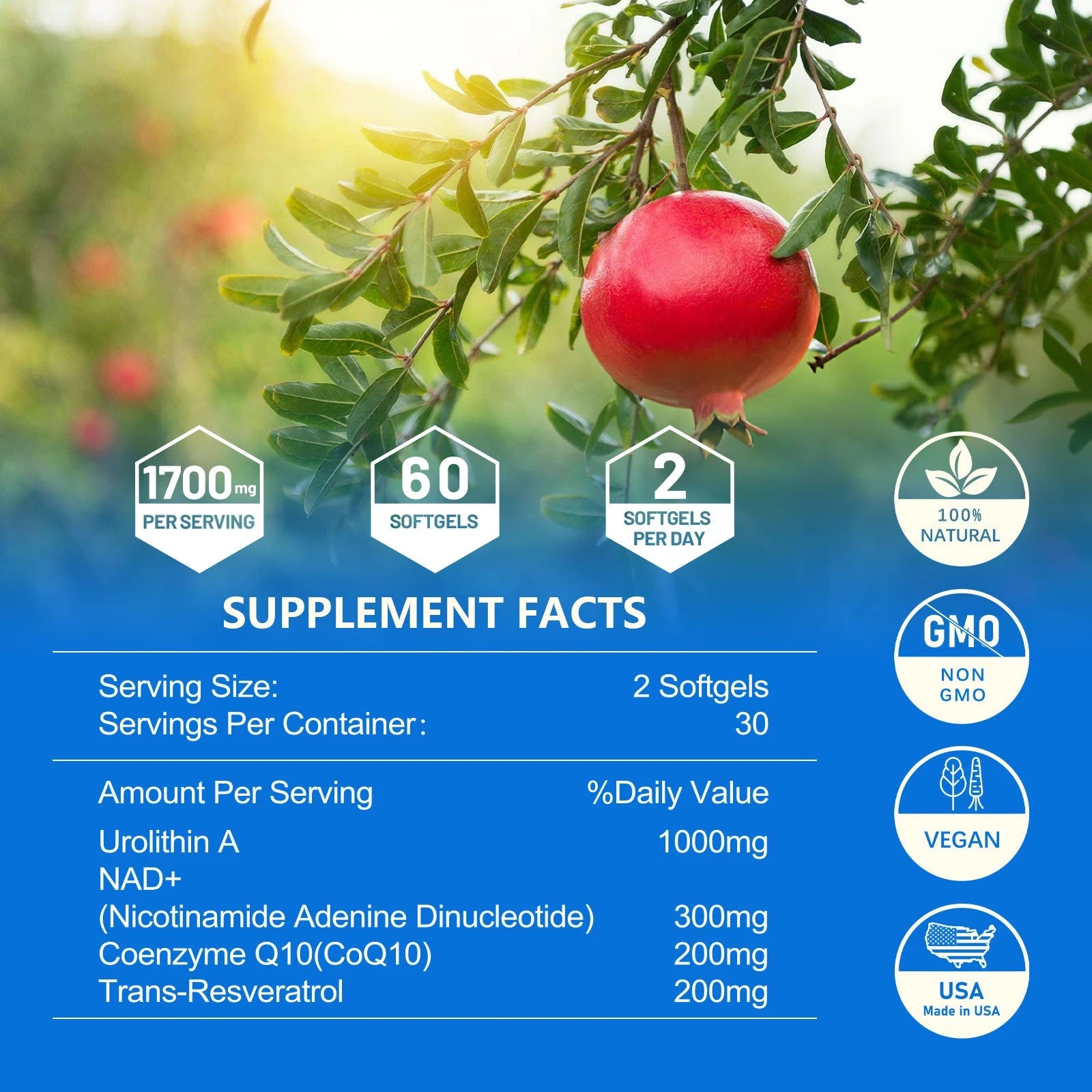
Each two-softgel serving provides:
-
Urolithin A – 1,000 mg: The primary ingredient studied for its relationship with mitophagy, mitochondrial maintenance, and muscle function.
-
NAD+ – 300 mg: A coenzyme involved in cellular metabolism and oxidation-reduction reactions.
-
CoQ10 – 200 mg: A naturally occurring compound involved in the mitochondrial electron transport chain and cellular energy production.
-
Trans-Resveratrol – 200 mg: A plant-derived polyphenol investigated for its biological activities and potential relevance to cellular health.
These ingredients have different research backgrounds and biological roles. Their inclusion in one formula offers a convenient way to take them together, but the combination itself has not been established as producing a synergistic clinical effect.
Each bottle contains 60 softgels, providing 30 daily servings.
For the full ingredient list, dietary information, and product details, visit inGreens Urolithin A Complex.
How to Approach Urolithin A Supplementation
Supplements are only one part of a broader approach to everyday wellness. Regular physical activity, balanced nutrition, and adequate sleep remain important foundations for maintaining overall health as we age.
For those considering Urolithin A, a few practical points are worth keeping in mind:
Check the serving size. Different products may contain different amounts of Urolithin A per capsule or serving. Always compare the actual daily serving rather than the amount listed per capsule.
Look beyond the headline ingredient. Review the complete formula, ingredient amounts, manufacturing information, and product quality standards.
Set realistic expectations. Human research is still developing. Results from clinical trials should not be interpreted as a guarantee of individual outcomes.
The suggested use for inGreens Urolithin A Complex is two softgels daily, with or without food, or as directed by a healthcare professional. Always follow the instructions on the product label.
If you take medication, have an existing medical condition, are pregnant, or are breastfeeding, consult a qualified healthcare professional before starting a new supplement.
The Takeaway: Understanding the Science Behind Urolithin A
Urolithin A has become an interesting subject in mitochondrial research because of its relationship with mitophagy and the body's cellular maintenance processes.
Early human trials have reported improvements in selected muscle-related measurements and changes in certain mitochondrial health biomarkers. However, the evidence remains developing, and more research is needed to understand its long-term effects and potential applications.
For consumers, the most useful approach is to look beyond marketing claims, understand what the research actually measures, and evaluate a supplement based on its complete formulation and quality information.
Interested in exploring the formula?
Discover inGreens Urolithin A Complex and learn more about its four featured ingredients and daily serving information.
This article is intended for general educational purposes only and is not medical advice. The statements made in this article have not been evaluated by the Food and Drug Administration. This product is not intended to diagnose, treat, cure, or prevent any disease.